
Portland Cabinet Painting: What Actually Gets Results
Cabinet painting in Portland, Oregon is one of the most cost-effective ways to transform a kitchen or bathroom — but it’s also one of the most unforgiving surfaces to paint. Done poorly, it peels within a year. Done well, it holds up for a decade. The difference almost always comes down to preparation, product selection, and application method — not the color you choose.
This guide walks through what the process actually involves, what to watch out for when hiring, and how to evaluate whether your cabinets are good candidates for painting in the first place.
Are Your Cabinets Worth Painting?
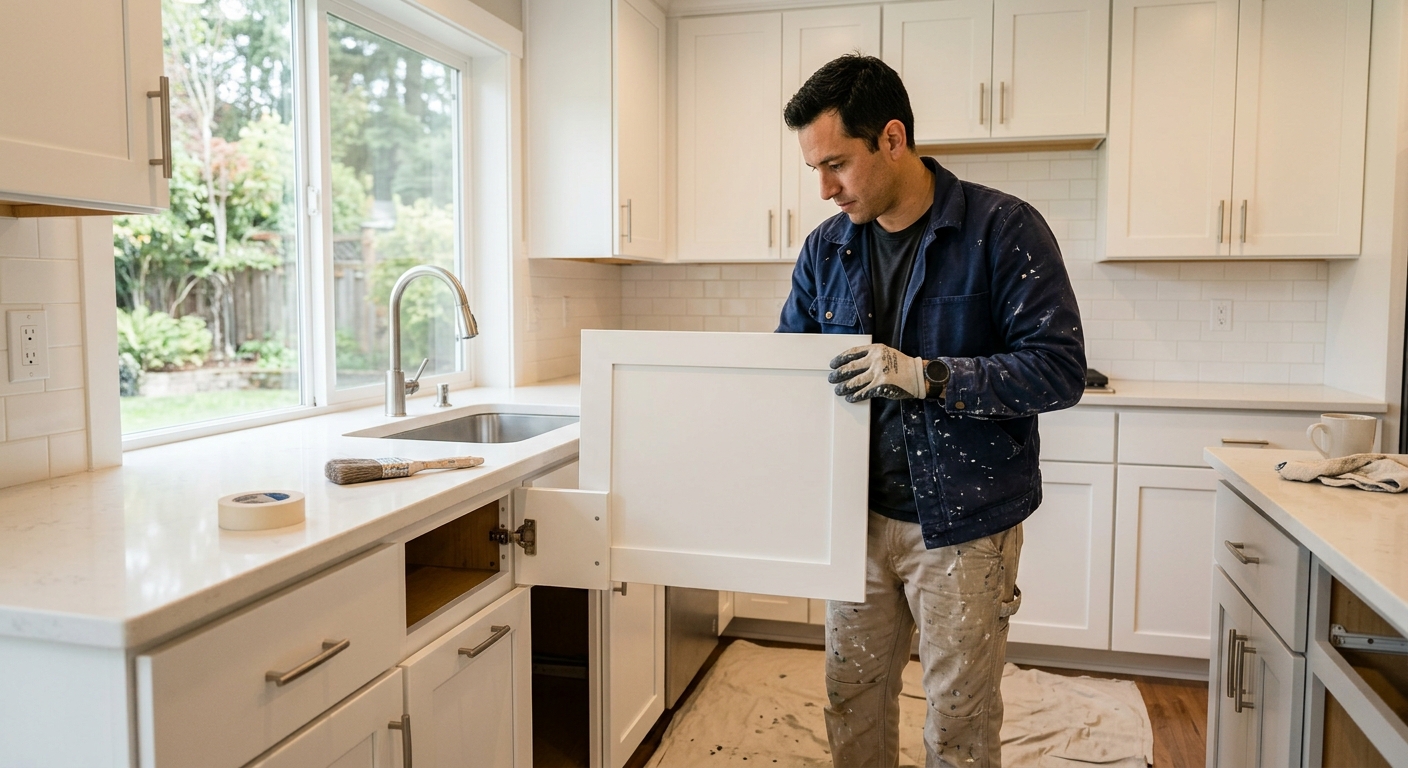
Not every cabinet is a good candidate. Before investing in cabinet painting Portland Oregon homeowners should assess the substrate — the underlying material the cabinet is made from. Solid wood and MDF (medium-density fiberboard) with a factory finish both accept paint well when properly prepped. Thermofoil cabinets, which have a vinyl wrap over MDF, are trickier. The wrap can peel away from heat exposure, and paint adhesion on thermofoil is unreliable without specific preparation steps.
Also look at the cabinet boxes themselves. If the frames are warped, the doors are swollen from moisture, or the hinges are failing, painting over those problems won’t fix them. A paint job is a finish — it doesn’t correct structural issues.
Portland’s climate adds a layer of complexity. High humidity during fall and winter months can affect how paint cures inside a kitchen, especially near the sink or dishwasher. Proper ventilation during and after application matters more here than in drier climates.
Cabinet Painting Portland Oregon: The Prep Work That Matters
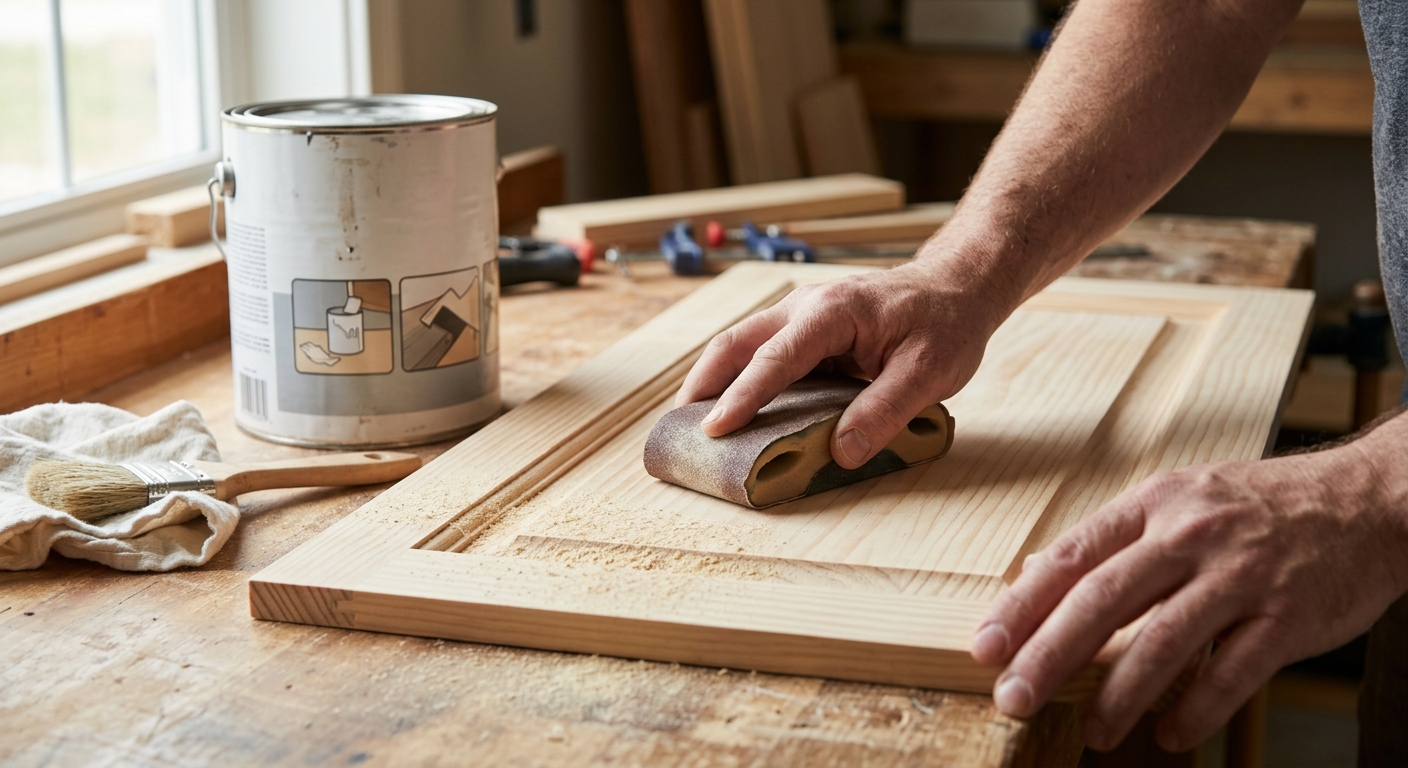
Preparation is where most DIY cabinet projects and under-resourced contractors cut corners. It’s also where the outcome is largely decided. Here’s what thorough prep looks like:
- Degreasing: Kitchen cabinets accumulate grease and cooking residue that standard cleaning won’t remove. A TSP substitute (trisodium phosphate alternative) or dedicated cabinet degreaser is necessary before any sanding or priming begins.
- Sanding: Scuff sanding the existing finish — typically with 150 to 180 grit — creates mechanical adhesion for the primer. Skipping this step is the single most common reason painted cabinets fail.
- Filling and repairs: Dents, holes from old hardware, and grain texture in raw wood all need to be addressed before priming. On oak cabinets specifically, grain filling is often necessary to achieve a smooth painted finish.
- Priming: A bonding primer formulated for cabinetry — not a standard wall primer — is essential. Products like Zinsser BIN (shellac-based) or a high-adhesion waterborne primer are commonly used on cabinet surfaces.
Each door and drawer front should be removed, labeled, and painted flat rather than in place. Painting cabinet doors while they’re hanging on the frame leads to drips, uneven coverage, and brush marks that are difficult to correct.
Choosing the Right Paint for Cabinets
For cabinet painting Portland Oregon projects, the paint category matters as much as the brand. Standard interior latex wall paint is not appropriate for cabinets. Cabinet surfaces need a hard, durable finish that resists moisture, cleaning products, and daily contact.
The two most common options are:
- Alkyd-hybrid waterborne enamels: Products like Benjamin Moore Advance or Sherwin-Williams Emerald Urethane Trim Enamel cure to a hard, factory-like finish. They’re low-VOC, easy to clean up, and level well — meaning brush marks flow out as the paint dries.
- Conversion varnishes and catalyzed lacquers: These are professional-grade products typically sprayed in a shop or controlled environment. They cure through a chemical reaction rather than just drying, which produces an extremely durable finish. These require specialized equipment and ventilation.
For most residential cabinet painting projects in Portland, a quality alkyd-hybrid enamel applied by brush and roller or spray delivers excellent results without the complexity of catalyzed products.
Spray vs. Brush-and-Roll: What’s the Difference?
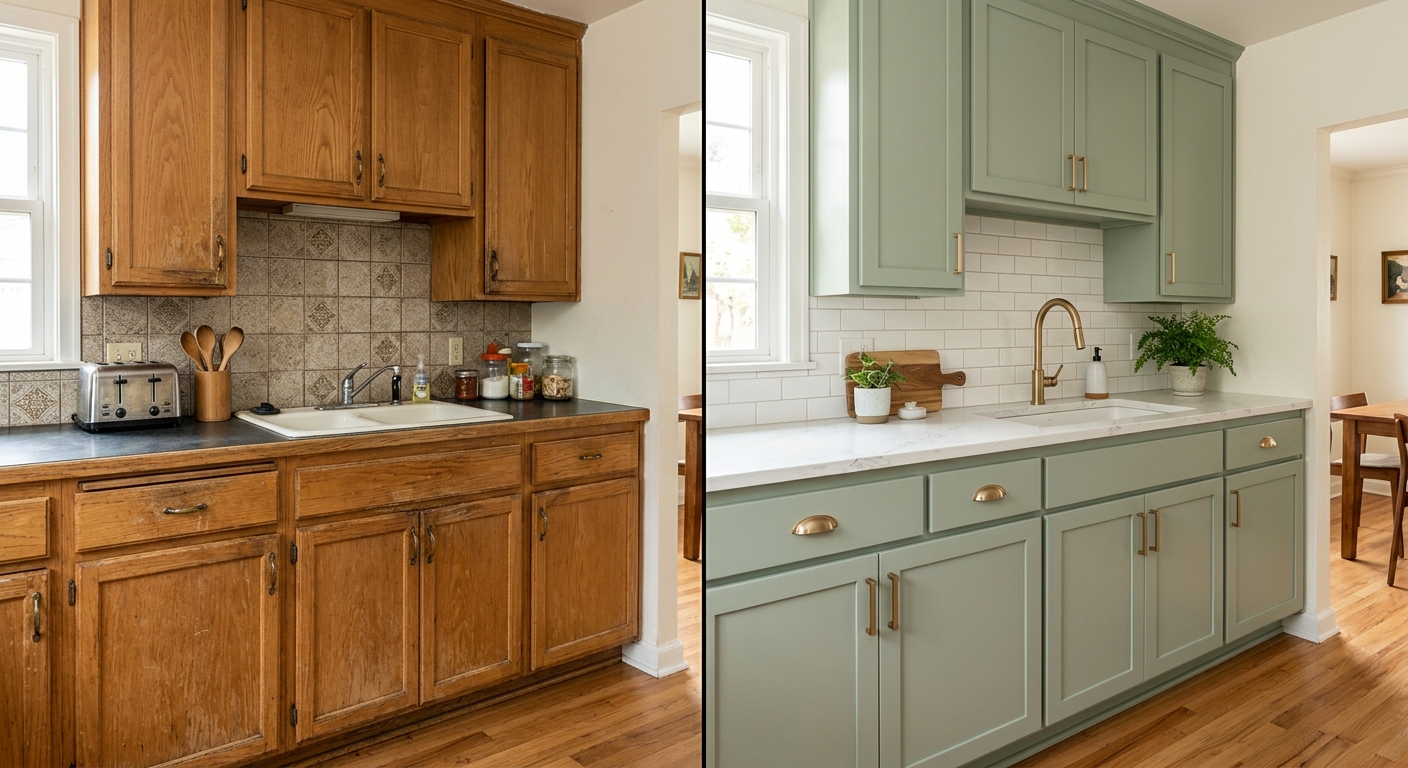
Spraying cabinet doors produces the smoothest finish — it’s the method that most closely replicates a factory look. However, it requires masking off the entire kitchen, proper spray equipment, and experience to avoid runs and uneven mil thickness (the thickness of the dried paint film).
Brush-and-roll application, done carefully with a quality foam roller and a fine-bristle brush for edges, can produce excellent results on site without the setup complexity of spraying. The finish has slightly more texture but is often indistinguishable once installed and viewed from a normal distance.
The right method depends on the project scope, the client’s expectations, and the site conditions. A professional contractor should be able to explain which approach they’re recommending and why.
What to Ask Before Hiring a Cabinet Painter in Portland
Cabinet painting is detail work. Before hiring anyone, ask these questions directly:
- Will you remove the doors, or paint them in place?
- What primer are you using, and why?
- What’s your process for degreasing?
- How many coats of topcoat are included?
- What paint product are you applying, and what’s the cure time before normal use?
Vague answers to these questions are a signal. A contractor who has done this work consistently will answer each one without hesitation.
Beyond Paint: What a Full-Service Contractor Can Handle
A common assumption is that painting contractors only paint walls. In practice, a capable commercial and residential painting contractor handles a much wider range of work — drywall repair, surface preparation, wallcovering installation, and specialty coatings among them.
For cabinet projects specifically, this matters because cabinets rarely exist in isolation. A kitchen refresh might also involve patching drywall where old tile was removed, painting the surrounding walls, or refinishing adjacent trim. Working with a contractor who can handle all of it under one scope avoids the coordination headache of managing multiple trades.
District Painting Co. has worked on cabinet painting projects across Portland since 2018, alongside larger commercial and residential scopes. That range of work — from historic restoration to tenant improvements — means the preparation standards and product knowledge carry over directly to cabinet work. The same discipline that goes into intumescent fireproofing applications or lead-safe certified projects applies to getting a cabinet finish right the first time.
Cure time is worth mentioning here: most waterborne enamels are dry to the touch within hours but don’t reach full hardness for 21 to 30 days. During that window, handle cabinet doors gently and avoid harsh cleaners. This is something homeowners aren’t always told upfront, and it matters for setting realistic expectations.
Cost Factors for Cabinet Painting in Portland
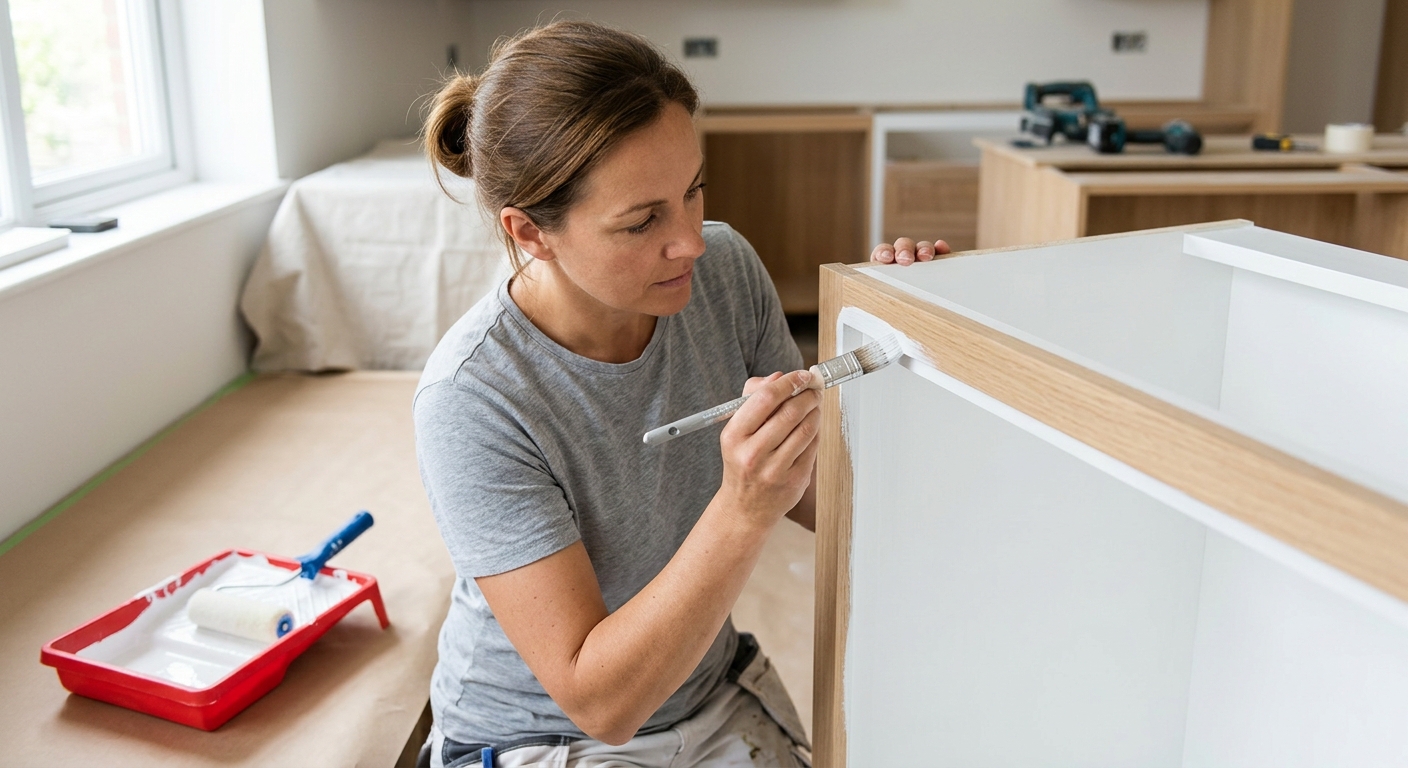
Pricing varies based on the number of doors and drawer fronts, the condition of the existing finish, whether spray or brush application is used, and the paint product specified. A rough range for a standard kitchen in Portland runs from $1,200 to $3,500 depending on scope and complexity. Quotes that come in significantly below that range often reflect shortcuts in prep or product quality — which shows up within the first year.
Getting two or three detailed written quotes — not just a number, but a breakdown of materials and process — is the most reliable way to evaluate value rather than just price.
Talk to District Painting Co. About Your Cabinets
If you’re considering cabinet painting in Portland, Oregon and want a straight answer about whether your cabinets are good candidates and what the process would involve, District Painting Co. is glad to take a look. We’re a COBID-certified contractor serving Portland and the surrounding region, licensed in Oregon (#222669), Washington, and Idaho.
Call us at 503-560-7662 to schedule a walkthrough and get an honest assessment.
