
Portland Commercial Drywall Repair: What to Expect
Commercial drywall repair in Portland ranges from simple patch work after a tenant moves out to complex restoration in fire-damaged or historically significant buildings. The quality gap between a rushed patch and a properly finished repair is visible every time light rakes across the wall — and in a commercial space, that matters. This article covers what good commercial drywall repair actually involves, what questions to ask before hiring, and where things commonly go wrong.
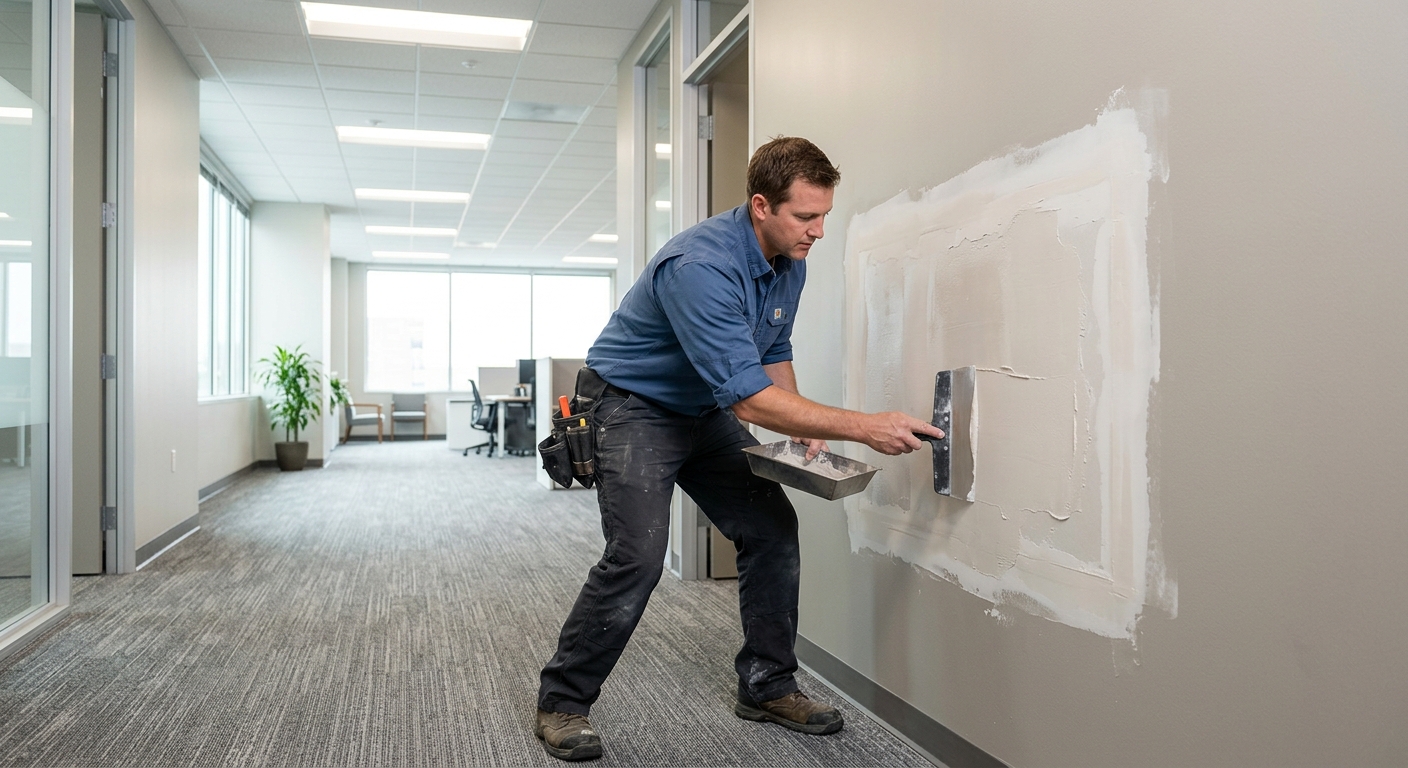
Why Commercial Drywall Repair Is Different from Residential
In a home, a patch that’s slightly off-texture is annoying. In a commercial space — a law office in the Pearl District, a medical suite in Lake Oswego, a retail buildout in the Lloyd District — it signals neglect to clients and tenants. The standards are higher, and the stakes are more visible.
Commercial repairs also happen under operational pressure. A property manager can’t always shut down a floor for a week. Phased scheduling — completing repairs in sections to minimize disruption — is often necessary and requires a contractor who plans work deliberately rather than just showing up with a bucket of mud.
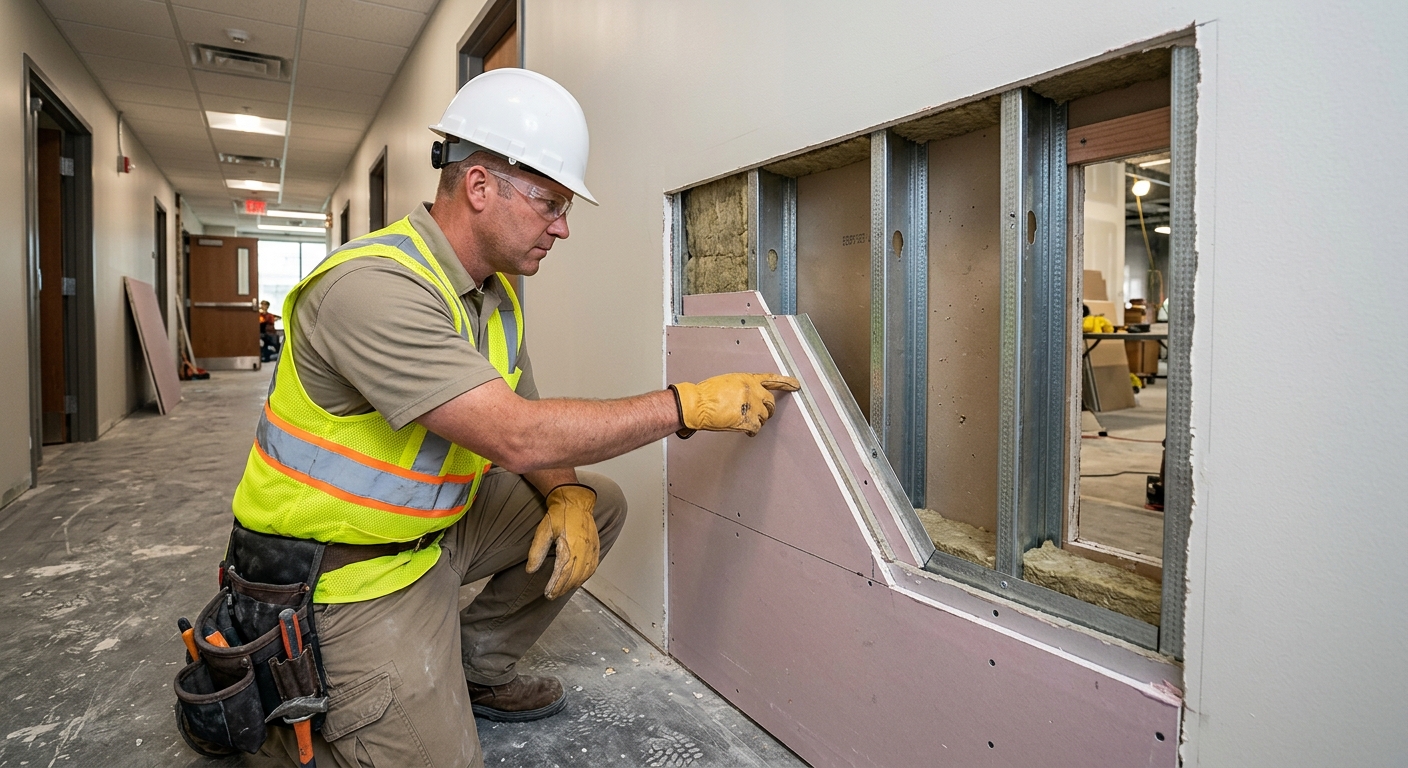
Fire-rated assemblies add another layer of complexity. Many commercial walls are part of a fire-rated system, meaning the drywall type, thickness, and fastening pattern are specified by code. Cutting into those walls for electrical or plumbing work and then patching incorrectly can compromise the fire rating of the entire assembly. A contractor doing commercial drywall repair needs to recognize fire-rated construction and restore it correctly — not just make the surface look smooth.
Texture Matching: The Step Most Contractors Skip
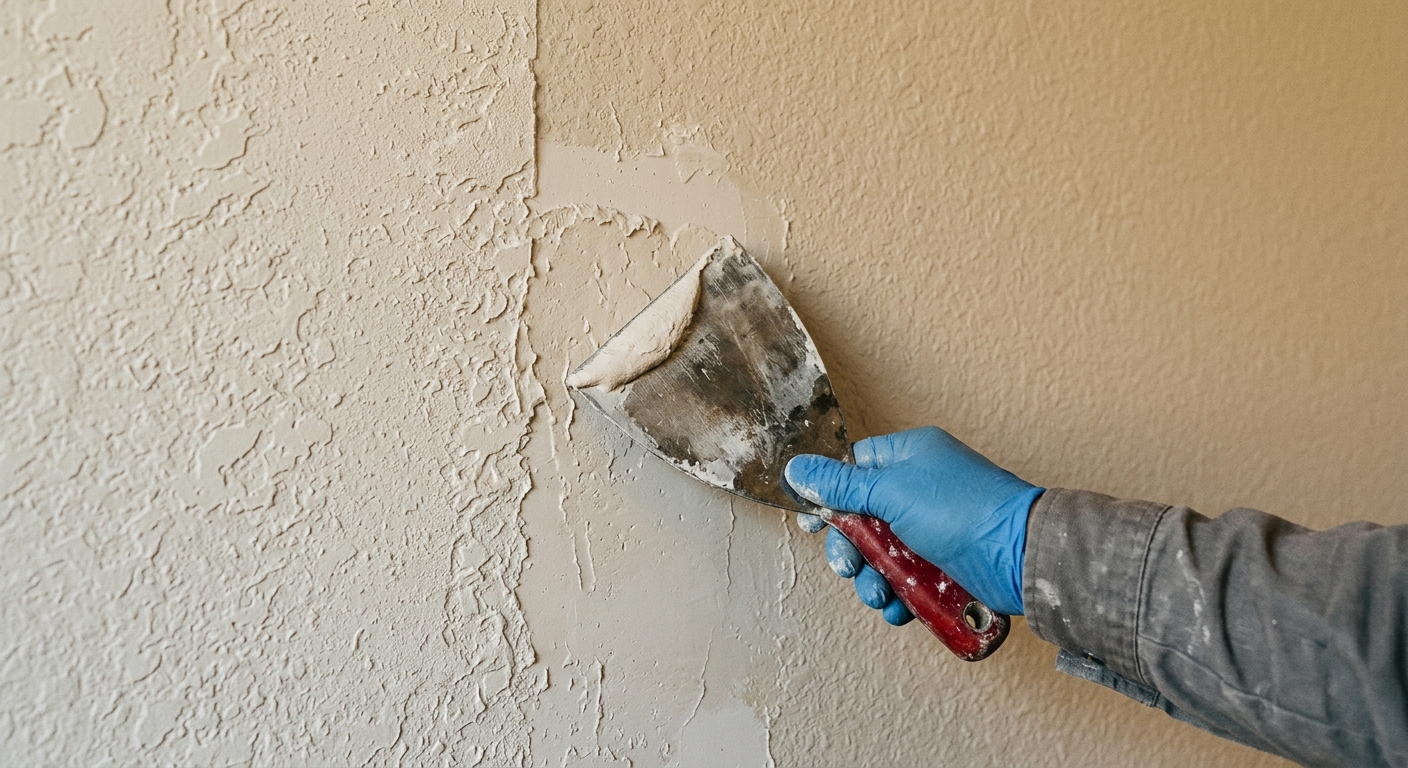
Texture matching is where most commercial drywall repairs fail visually. A patch can be structurally sound and still look like a patch if the texture doesn’t match the surrounding wall. This is especially common in older Portland commercial buildings where original finishes — skip trowel, knockdown, or orange peel — have been painted over multiple times and are difficult to replicate exactly.
A Level 5 finish — the highest drywall finishing standard, where a skim coat of joint compound covers the entire surface — is often the right solution in commercial spaces with critical lighting or semi-gloss paint. It eliminates the risk of texture mismatch entirely by creating a uniform surface. It costs more than a spot patch, but it’s the finish that holds up under inspection.
For spaces where Level 5 isn’t warranted, a skilled applicator can match most common commercial textures. The key is testing the texture on a scrap piece before applying it to the wall — something a careful contractor does as a matter of course.
Learn more about how texture matching fits into a complete repair and finishing process on our drywall repair and texturing service page.
Lead Paint Awareness in Older Portland Commercial Buildings
Portland has a significant stock of commercial buildings constructed before 1978, when lead-based paint was still in common use. If your building falls into that category, drywall repair isn’t just a finishing question — it’s a compliance question.
Cutting, sanding, or disturbing painted drywall surfaces in a pre-1978 building can release lead dust. EPA RRP (Renovation, Repair, and Painting) rules require certified contractors to follow lead-safe work practices in certain settings. Not every contractor working in commercial spaces is EPA Lead-Safe certified, and not every property manager thinks to ask.
District Painting Co. holds EPA Lead-Safe certification and has experience navigating lead paint protocols in older Portland commercial and institutional buildings. If your building predates 1978, confirm your contractor’s certification before work begins — not after.
Fire-Rated Drywall and Intumescent Considerations
Some commercial repairs intersect with fire-rated wall assemblies or areas requiring intumescent coatings — specialized paints that expand when exposed to heat to protect structural steel or seal gaps in fire-rated assemblies. This is common in tenant improvement projects, mechanical room upgrades, and structural steel exposure in open-ceiling commercial spaces.
If a repair involves cutting into a fire-rated wall, the patch must restore the original fire rating. That means using the correct drywall type (Type X is the most common fire-rated variant), the correct fastener pattern, and the correct joint treatment. An inspector can fail a tenant improvement for a non-compliant patch even if the surface looks fine.
Contractors who understand intumescent fireproofing — a niche that very few painting and drywall contractors hold — are better equipped to recognize when a repair touches a fire-rated system and needs to be treated accordingly.
How Long Will Commercial Drywall Repair Take?
This is one of the most common questions property managers ask, and the honest answer is: it depends on the scope, but a typical commercial patch-and-paint sequence follows a predictable timeline.
A single-room patch, texture match, prime, and finish coat can often be completed in two to three days — one day for patching and letting compound dry, one day for texture and prime, one day for finish coats. Larger repairs, multi-room projects, or work requiring fire-rated restoration will take longer. Phased scheduling across active commercial floors adds time by design.
What slows projects down most often: insufficient dry time between coats, skipping primer before finish paint, and contractors who don’t account for the cure time of joint compound before sanding. Rushing any of these steps produces a repair that looks fine on day one and shows cracks or texture failure within months.
The Paint-Ready Finish: Where Drywall Repair Ends and Painting Begins
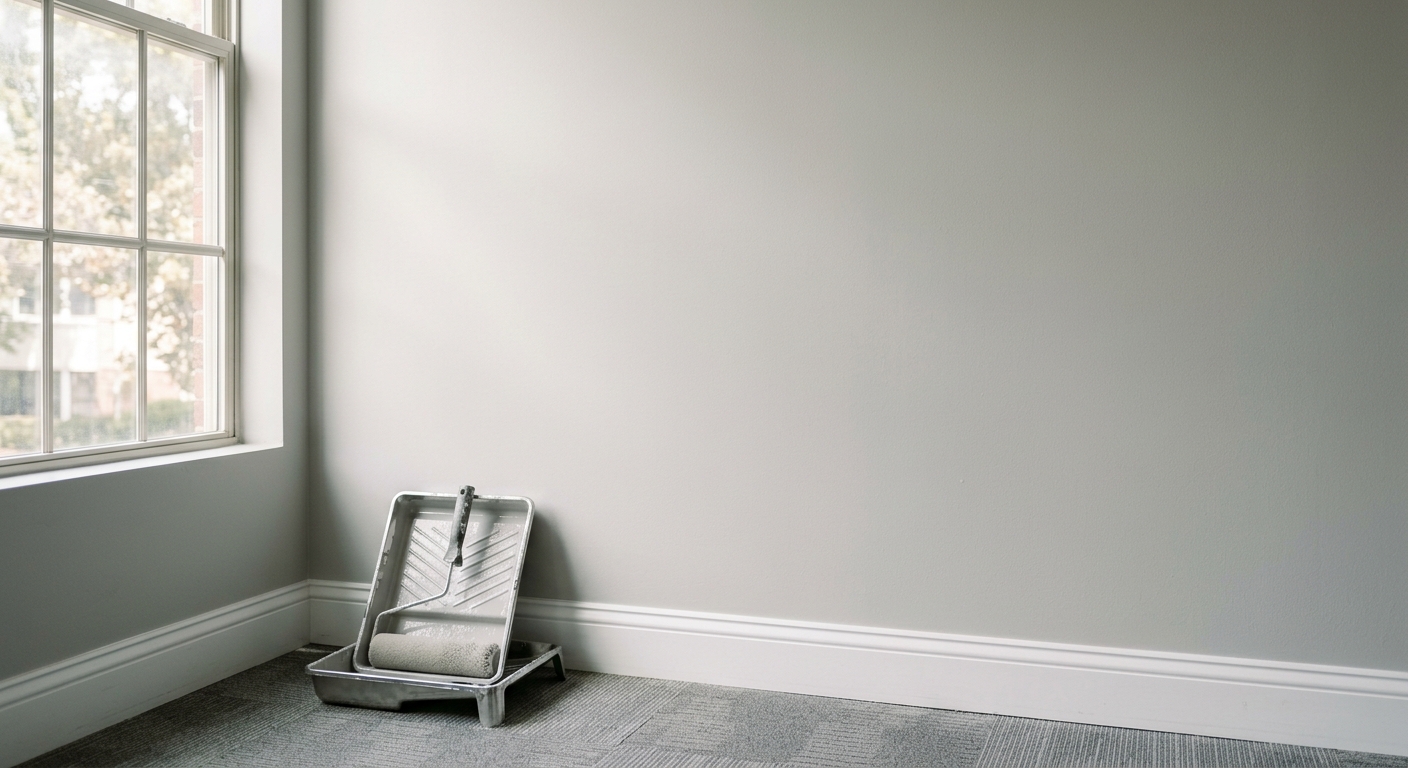
One gap in most commercial drywall repair work is the handoff between trades. A drywall contractor patches the wall and leaves. A painter arrives and may or may not prime the patch correctly before applying finish coats. If the patch isn’t properly primed — especially with a PVA (polyvinyl acetate) primer designed for fresh joint compound — the finish coat will flash, meaning the repaired area absorbs paint differently and appears as a dull spot against the surrounding wall.
When drywall repair and painting are handled by the same contractor, that handoff disappears. The person who patched the wall knows exactly what primer it needs and applies it before the finish coat goes on. The result is a wall that reads as continuous — no patches, no flashing, no visible repair history.
District Painting Co. has handled this integrated repair-to-finish process across commercial tenant improvements, property management contracts, and institutional buildings throughout the Portland metro area for over eight years. Oregon License #222669, COBID ESB certified, and EPA Lead-Safe certified.
For a closer look at how we approach surface preparation and finishing as a single continuous process, visit our drywall repair and texturing page.
What to Ask Before Hiring a Commercial Drywall Repair Contractor
- Are you EPA Lead-Safe certified? (Required if the building predates 1978.)
- Can you match existing texture, and will you test it before applying?
- Do you handle the painting as well, or will there be a separate handoff?
- Are you familiar with fire-rated wall assemblies and how to restore them correctly?
- Can you work in phases to minimize disruption to our tenants or operations?
A contractor who can answer all five questions clearly — without hesitation — is operating at a commercial level. One who stumbles on the fire-rating or lead paint questions is likely better suited to residential patch work.
Talk to District Painting Co. About Your Commercial Repair
District Painting Co. handles commercial drywall repair and integrated paint-ready finishing throughout Portland and the surrounding metro. If you’re a property manager, facility manager, or building owner dealing with damaged walls, a tenant improvement, or a repair that needs to meet commercial standards, call us at 503-560-7662 to discuss your project.
