
Fence Staining in Portland: What Actually Works
Fence staining in Portland is one of those projects that looks straightforward until you’re standing in a lumber yard trying to choose between a semi-transparent oil stain and a water-based solid color. The Pacific Northwest climate — wet winters, dry summers, mild temperatures — creates specific demands that generic staining advice doesn’t account for. This guide covers product selection, prep work, timing, and what separates a fence that holds up for seven years from one that peels in two.
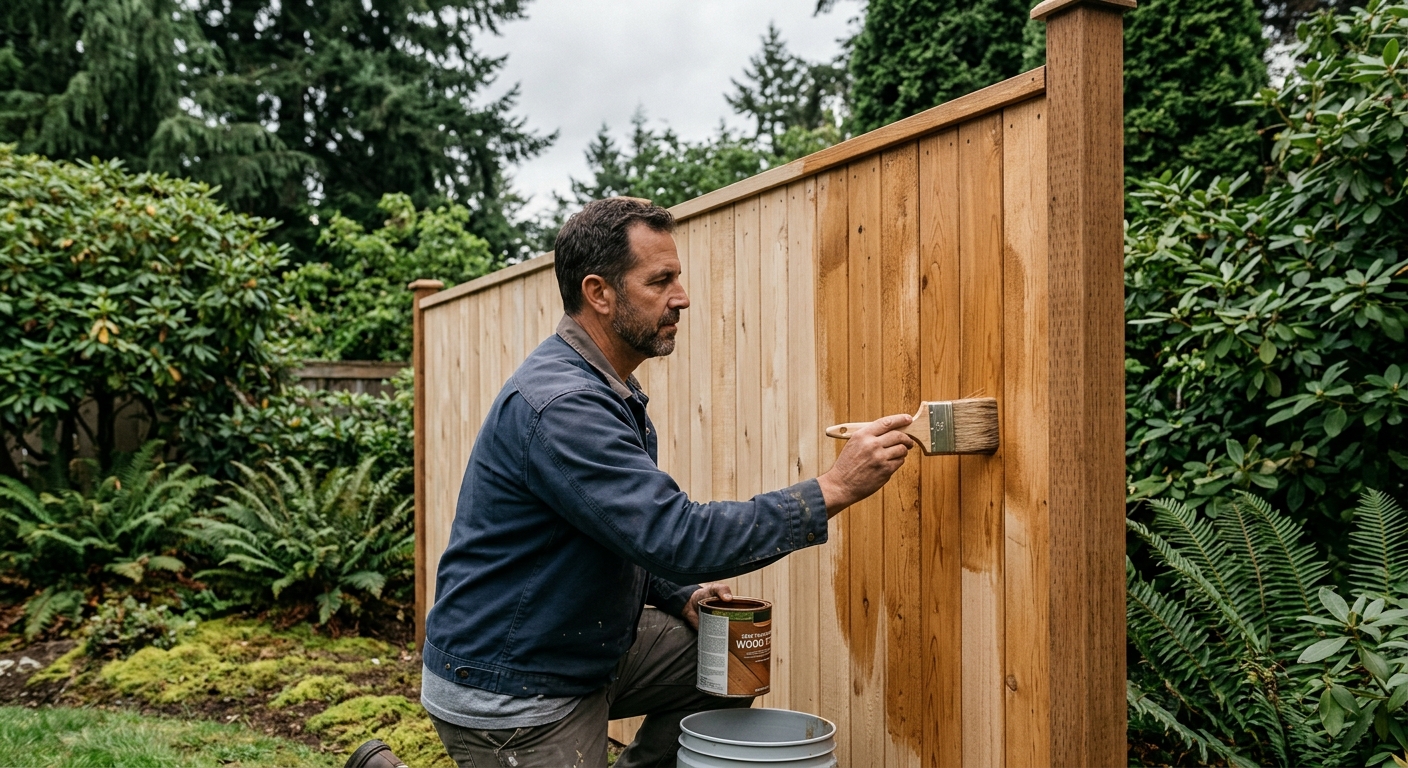
Why Portland’s Climate Makes Fence Staining Different
Wood expands and contracts with moisture. In Portland, that cycle is aggressive. From October through April, fences absorb rain for months at a stretch. Then summer arrives and the same wood dries out under weeks of direct sun. That repeated swelling and shrinking is what drives stain out of the wood grain over time.
Cedar and Douglas fir — the two most common fence materials in Portland — respond differently to this cycle. Cedar is naturally rot-resistant and holds stain reasonably well. Douglas fir is denser and more prone to surface checking (small surface cracks) if it dries too fast after a wet season. The product you choose and when you apply it should reflect which wood you’re working with.
Portland also sits in a region where mold and mildew pressure is high. Any stain you apply should contain a mildewcide — a chemical agent that inhibits mold growth in the film. This isn’t optional here. A stain without mildewcide protection will show green and black discoloration within a single wet season on a north-facing fence.
Stain Types: Solid, Semi-Transparent, and Clear
Choosing the right stain type is the most consequential decision in any fence staining project. Each category behaves differently and is suited to different conditions.
Solid Stains
Solid stains work like thin paint. They hide the wood grain entirely and form a surface film. They offer the most UV and moisture protection, but that film eventually peels — especially on horizontal surfaces and rough-sawn wood. On a fence that hasn’t been stained before, solid stains can look excellent for four to six years. On a fence with a previous solid coating, adhesion becomes the challenge, and prep work becomes critical.
Semi-Transparent Stains
Semi-transparent stains penetrate into the wood rather than sitting on top of it. They show grain and texture, which suits the natural aesthetic most Portland homeowners prefer. Because they don’t form a surface film, they don’t peel — they simply fade. Recoating is easier, and the wood can breathe, which reduces moisture-related damage over time. For new cedar fencing in good condition, a quality semi-transparent oil-based stain is usually the best long-term choice.
Clear and Toner Finishes
Clear sealers offer minimal pigment and therefore minimal UV protection. UV radiation breaks down lignin — the structural compound that gives wood its rigidity — and causes graying. A clear finish will slow moisture penetration but won’t stop the fence from going gray within one to two seasons. Toners add a small amount of pigment for UV protection while keeping the natural wood look. They’re a reasonable choice for new cedar if you want a very natural appearance, but they require more frequent reapplication than semi-transparent stains.
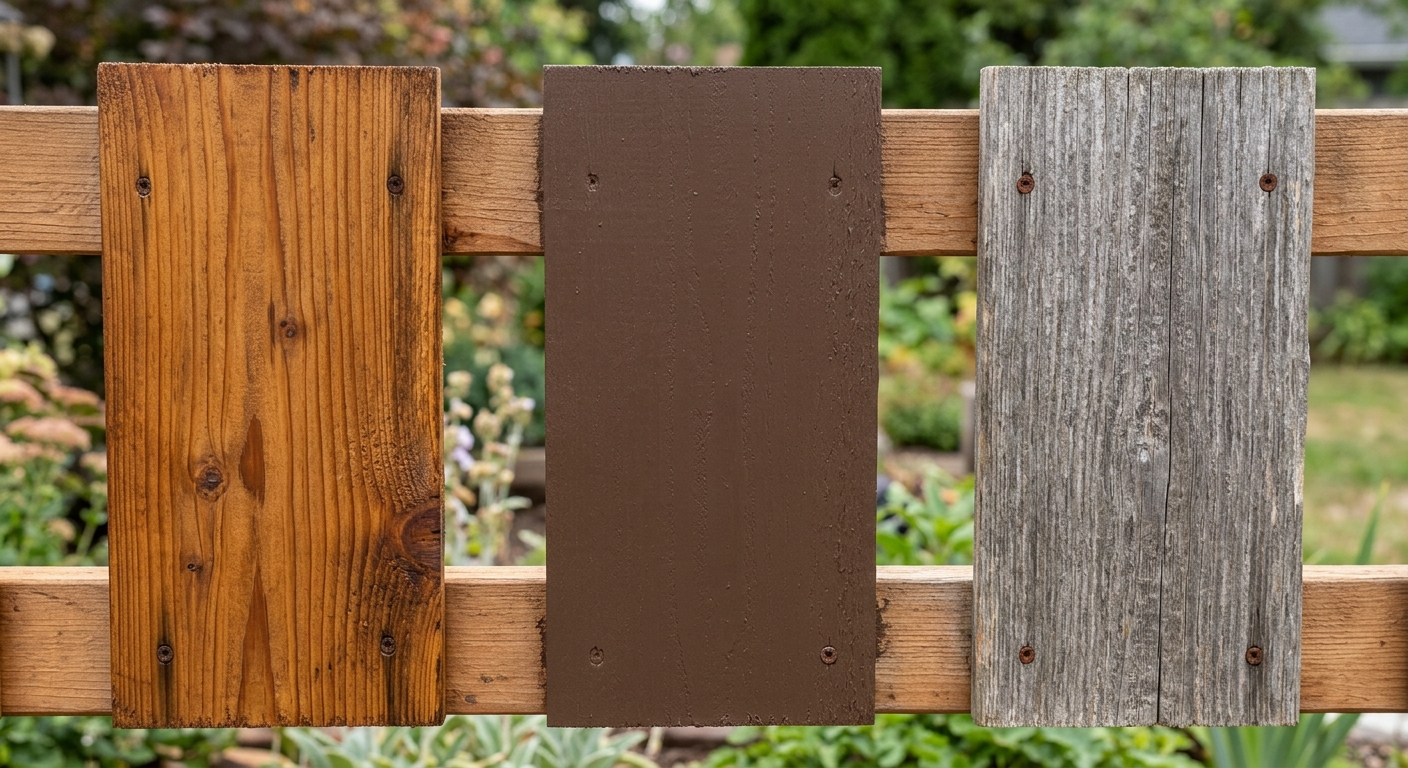
Prep Work: The Step Most People Skip
The condition of the wood surface before you apply stain determines how long that stain will last. No amount of product quality compensates for poor prep. This is where most DIY fence staining projects fall short — and where professional results diverge from weekend results.
Cleaning and Brightening
Before any stain goes on, the fence needs to be clean. Pressure washing removes dirt, mildew, and loose wood fibers. For a fence that has been previously stained, a chemical stripper may be necessary to remove the old coating before the new one will bond properly. After washing, wood brighteners — oxalic acid-based solutions — restore the natural pH of the wood and open the grain for better stain absorption. This step is frequently skipped, but it makes a measurable difference in how evenly the stain penetrates.
Dry Time
This is where Portland’s climate creates a specific challenge. Wood must be dry before staining — typically below 15% moisture content. After pressure washing, wood needs 48 to 72 hours of dry weather before stain application. In Portland, finding that window between April and October is manageable. Attempting to stain in the fall or winter is almost always a mistake. Stain applied to wet or damp wood won’t cure properly, will trap moisture, and will fail prematurely.
Sanding and Repairs
Rough-sawn cedar fencing typically doesn’t need sanding. Smooth milled boards benefit from light sanding to open the grain. Any boards with significant checking, rot, or loose knots should be replaced before staining — stain doesn’t repair structural problems, it just covers them temporarily.
Timing: When to Stain a Fence in Portland
The ideal window for fence staining in Portland runs from late May through September. You need surface temperatures between 50°F and 90°F, no rain in the forecast for at least 24 to 48 hours after application, and low humidity. Direct sunlight during application can cause stain to dry too fast and leave lap marks — early morning or overcast days are preferable for even penetration.
If you’re planning a professional fence staining project, scheduling matters. Contractors book up quickly through June and July. Getting on a schedule in April — even if the work happens in June — gives you the best chance of hitting the ideal application window. The same scheduling advice applies to any exterior work in Portland; you can read more about how weather affects exterior project planning in this overview of Portland weather rules for exterior house painting.
Oil-Based vs. Water-Based Stains: The Real Difference
This question comes up constantly, and the answer has changed over the past decade as water-based formulations have improved significantly.
Oil-based stains penetrate deeper into wood grain and have historically offered better durability on rough or weathered surfaces. They require mineral spirits for cleanup and have higher VOC (volatile organic compound) content. In Oregon, VOC regulations have tightened, and some oil-based products are no longer available in certain formulations. Drying time is longer — typically 24 to 48 hours before a second coat.
Water-based stains have improved dramatically. Modern acrylic-based stains from manufacturers like Armstrong Clark, TWP (Total Wood Preservative), and Defy offer penetration and durability that rivals oil-based products. Cleanup is easier, dry time is shorter, and VOC content is lower. For most fence staining projects in Portland today, a high-quality water-based semi-transparent stain is a practical and effective choice.
The one area where oil-based products still hold an edge is on very weathered, porous wood. Highly absorbent wood drinks oil-based stain in a way that water-based products can’t always match. If you’re staining an older fence that’s been gray and unprotected for several years, an oil-based product may give better penetration and coverage.
Application Methods: Brush, Roller, or Sprayer
Each method has a place in fence staining, and professionals often combine them on the same project.
Spraying is fast and works well on rough-sawn or dog-eared fence boards where a brush can’t easily reach into crevices. But spray application requires back-brushing — working the stain into the wood with a brush immediately after spraying — to ensure even penetration rather than surface pooling. Overspray onto plants, concrete, and neighboring surfaces is a real concern and requires careful masking.
Brush application is slower but gives the most control and the best penetration. On smooth boards or tight board-on-board fencing, a good brush produces excellent results. A 4-inch natural bristle brush works well with oil-based products; synthetic bristles are better for water-based stains.
Rollers work on flat fence panels but don’t get into gaps and crevices the way a brush does. They’re sometimes used for the face of wide boards, followed by brush work on the edges.
How Many Coats Does a Fence Need?
Most semi-transparent stains are designed as one-coat systems on new or properly prepared wood. The wood absorbs what it can hold, and a second coat on a saturated surface will just sit on top and peel. The exception is very weathered, porous wood that has been stripped and brightened — it may absorb a second coat after the first has dried.
Solid stains typically require two coats for even coverage and full color development. The first coat acts as a primer and sealer; the second coat builds the film. Always follow the manufacturer’s recoat window — applying the second coat too soon or too late affects adhesion.
How Long Will Fence Staining Last in Portland?
Realistic expectations: a quality semi-transparent stain on cedar fencing in Portland will last three to five years before it needs reapplication. South-facing fences in full sun will fade faster. North-facing fences in shade will hold color longer but may develop mildew. Solid stains on smooth boards can last four to six years before peeling becomes an issue.
These timelines assume proper prep and a quality product. A cheap stain applied without brightening or adequate dry time may fail in a single season. The cost difference between a budget stain and a professional-grade product is usually $20 to $40 per gallon — a small investment relative to the labor cost of reapplying in two years instead of five.
Common Questions About Fence Staining in Portland
How long will the project take?
A standard 150-linear-foot cedar fence typically takes one to two days of professional labor — one day for prep, washing, and brightening, and one day for stain application after the wood has dried. Larger or more complex fences take longer. Weather holds are the most common cause of schedule extension. A professional contractor will build a dry-time buffer into the schedule rather than rushing application.
Why does professional fence staining cost more than a DIY approach?
The labor is real — prep work alone on a weathered fence is time-consuming. But the bigger cost difference is in outcomes. A professional who does this work regularly knows which products perform in Portland’s climate, how to read wood moisture, how to apply stain without lap marks, and how to handle problem areas like end grain and post tops that absorb stain differently than field boards. The result lasts longer and looks more consistent. If you’re weighing professional versus DIY, this breakdown of Portland exterior house painting costs gives useful context for how prep and labor factor into project pricing.
Can you stain a fence that’s already been painted?
Not without stripping the paint first. Stain needs to penetrate wood to work. Paint creates a surface barrier that blocks penetration. If you apply stain over paint, it will sit on the surface and peel. A fence with an existing paint coating needs to be stripped — either chemically or mechanically — before stain can be applied. In some cases, it’s more practical to continue with a solid stain or paint rather than attempt a full strip.
Is fence staining something a painting contractor handles, or do I need a specialty company?
This is a common misconception. Many people assume painting contractors only handle interior walls or house exteriors. A full-service painting contractor handles all exterior wood surfaces — including fencing, decks, pergolas, and outbuildings. District Painting Co. handles fence staining as part of the same exterior wood finishing work we do on siding, trim, and decks. You don’t need a separate company. For a broader picture of what exterior painting contractors in Portland actually cover, this article on Portland exterior painting contractors is worth reading before you start making calls.
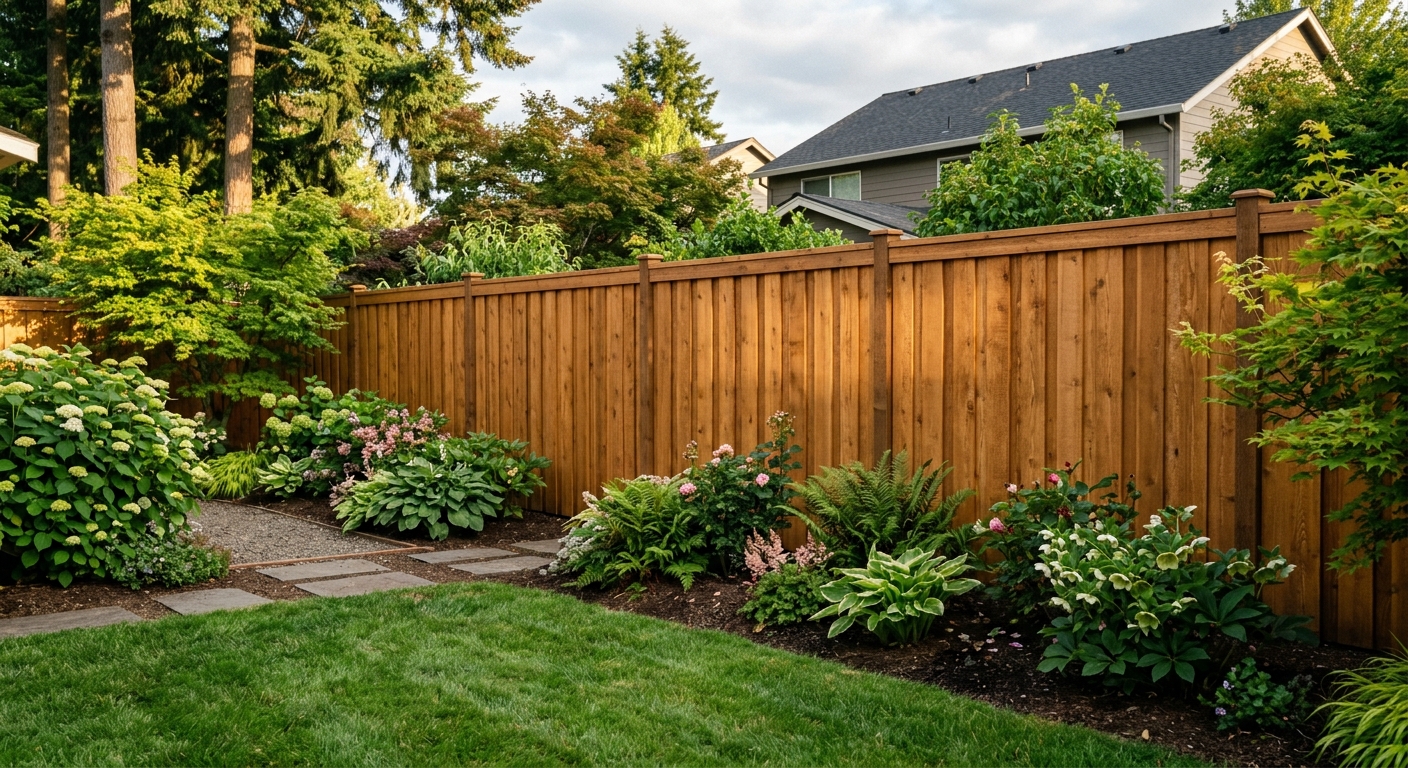
Why Portland Homeowners Work with District Painting Co. for Fence Staining
District Painting Co. has been doing exterior wood finishing work in Portland since 2018. Fence staining sits alongside deck refinishing, siding prep, and exterior trim work as part of how we approach the full exterior of a property — not as an afterthought. We’re licensed in Oregon, Washington, and Idaho (Oregon License #222669), and we carry EPA Lead-Safe certification for older properties where lead-based coatings may be present on structures adjacent to fencing.
We’re not a large anonymous operation. We’re a COBID-certified small business with a team that treats each project as a long-term relationship rather than a transaction. When we recommend a product or a prep approach for your specific fence, it’s based on what we’ve seen perform in Portland conditions — not what a national brand is marketing this season. Our Silver Award recognition from the Best of the Rose City reflects the kind of consistent, detail-oriented work that keeps clients calling us back for the next project.
If you’re planning exterior work beyond the fence — siding, decks, or the full house exterior — our team handles all of it under one scope. You can see how we approach complex exterior projects in this overview of Portland exterior house painting.
Ready to Talk About Your Fence?
If your fence is due for staining this season, the best time to get on a schedule is before the summer books fill. District Painting Co. serves Portland and the surrounding metro area. We’ll walk the fence with you, tell you honestly what prep it needs, and recommend a product that will hold up in the Pacific Northwest climate.
Call us at 503-560-7662 or reach out through our website to schedule a walkthrough and estimate.
