
Portland Historic Restoration Painters: What to Know
Historical restoration painters in Portland do more than apply fresh paint to old buildings. They work within preservation standards, use period-appropriate materials, and navigate certifications that general painters simply don’t carry. If you own a historic home in Irvington, Ladd’s Addition, or King’s Hill — or manage a property tied to Oregon Parks — the painter you hire needs specific qualifications. This article explains what those qualifications are, what the restoration process looks like, and how to evaluate any contractor you’re considering.
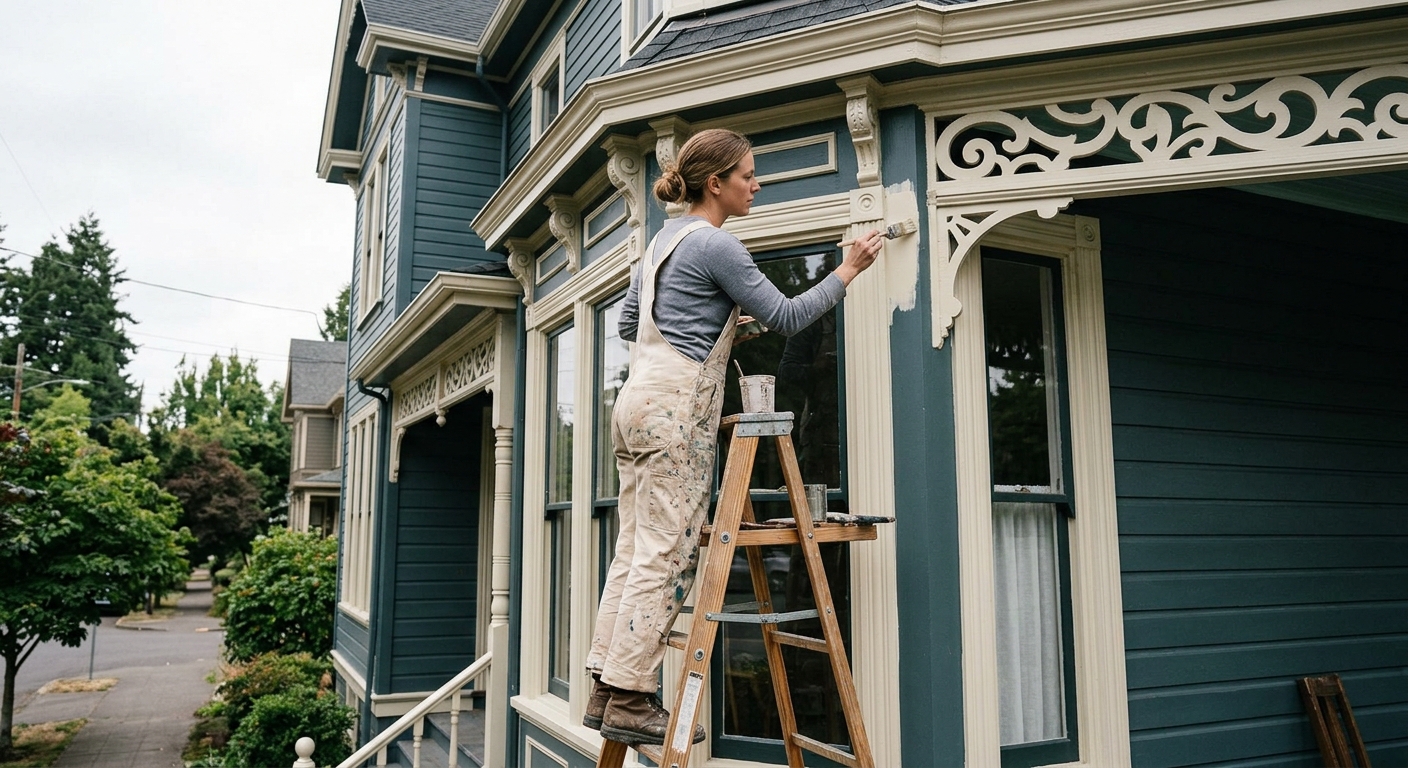
What Qualifies a Painter for Historic Restoration Work?
Not every licensed painter is qualified for historic restoration. The work requires knowledge of original substrates, compatible materials, and local preservation guidelines. For properties connected to Oregon State Parks, contractors must meet Oregon Parks and Recreation Department (OPRD) certification requirements — a credential that governs who can perform restoration work on state-managed historic structures.
OPRD certification signals that a contractor understands the Secretary of the Interior’s Standards for the Treatment of Historic Properties. These standards govern whether work qualifies as preservation, rehabilitation, restoration, or reconstruction — each with different rules about what you can change and what must stay intact.
For privately owned historic homes, Portland’s Bureau of Development Services enforces design guidelines in locally designated historic districts. A qualified restoration painter should be familiar with those guidelines before touching a single surface.
District Painting Co. holds Oregon Parks certification and has worked directly with Oregon State Parks on historic restoration projects — one of the few commercial painting contractors in Portland with that credential on record.
Linseed Oil Paint: Why It Matters for Historic Substrates
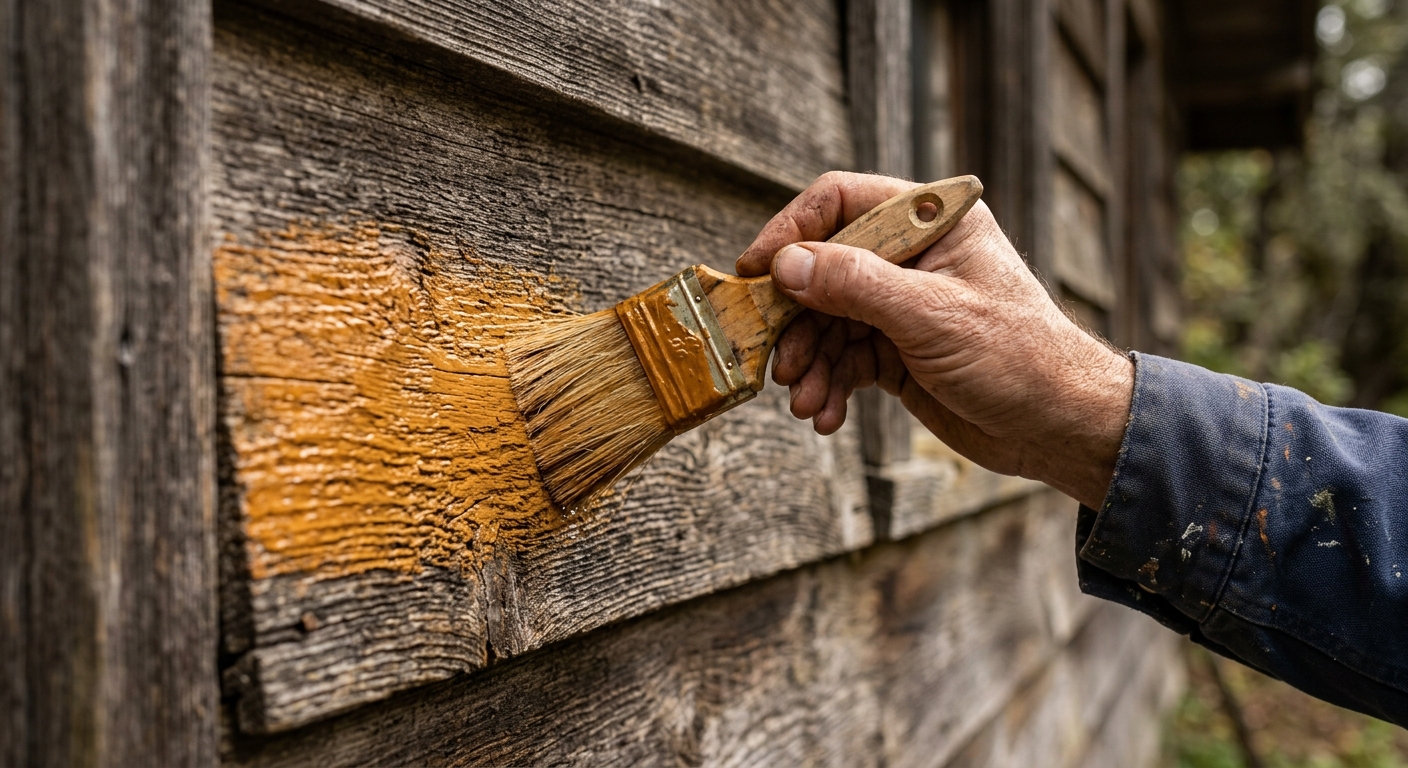
One of the most important material decisions in historic restoration is whether to use linseed oil paint. Linseed oil paint is a traditional formulation made from oxidized flaxseed oil and pigment. It was the standard exterior coating for wood structures before synthetic latex and alkyd paints became common in the mid-20th century.
On historic wood substrates — particularly old-growth fir, cedar, and redwood common in Portland’s Victorian and Craftsman homes — linseed oil paint behaves differently than modern coatings. It penetrates the wood rather than forming a surface film. This means it doesn’t peel or crack the way latex can when moisture moves through aged wood. It also allows the substrate to breathe, which is critical for structures that weren’t designed with vapor barriers.
Linseed oil paint requires more surface preparation and longer dry times between coats. It’s not the right choice for every project. But on a historic building where the wood is original and irreplaceable, it’s often the most compatible and durable option available. A restoration painter who doesn’t know this material — or doesn’t stock it — isn’t fully equipped for the work.
Lead Paint Abatement Comes First
Most Portland homes built before 1978 contain lead-based paint. In historic buildings, that paint may be layered beneath decades of subsequent coatings. Before any restoration painting begins, a qualified contractor must assess the lead paint situation and follow EPA Renovation, Repair, and Painting (RRP) Rule protocols if disturbing painted surfaces.
Lead abatement — the full removal or encapsulation of lead paint — is a prerequisite step, not an afterthought. Skipping it isn’t just a health risk; it can create legal liability for property owners. An EPA Lead-Safe certified firm knows how to test, contain, remove, and document lead paint removal before restoration work begins.
This is one area where hiring a painter who handles only the cosmetic work creates a real gap. A full-service historical restoration painter manages abatement and restoration as a single coordinated workflow, which reduces project time and ensures nothing is missed between phases. Learn more about how this fits into a complete project at District Painting Co.’s full service overview.
Pressure Washing Historic Facades: Proceed Carefully
Pressure washing is a standard prep step for exterior painting, but it requires real restraint on historic buildings. High-pressure water can erode soft mortar joints in brick, damage aged wood siding, and force moisture into wall cavities that lack modern drainage details.
For historic facades, low-pressure washing — sometimes called soft washing — combined with appropriate cleaning solutions is the correct approach. The goal is to remove biological growth, dirt, and chalk without abrading the substrate. A restoration painter should be able to explain exactly what pressure and method they’ll use before any water touches the building.
Interior Restoration: Plaster Repair and Wallcovering
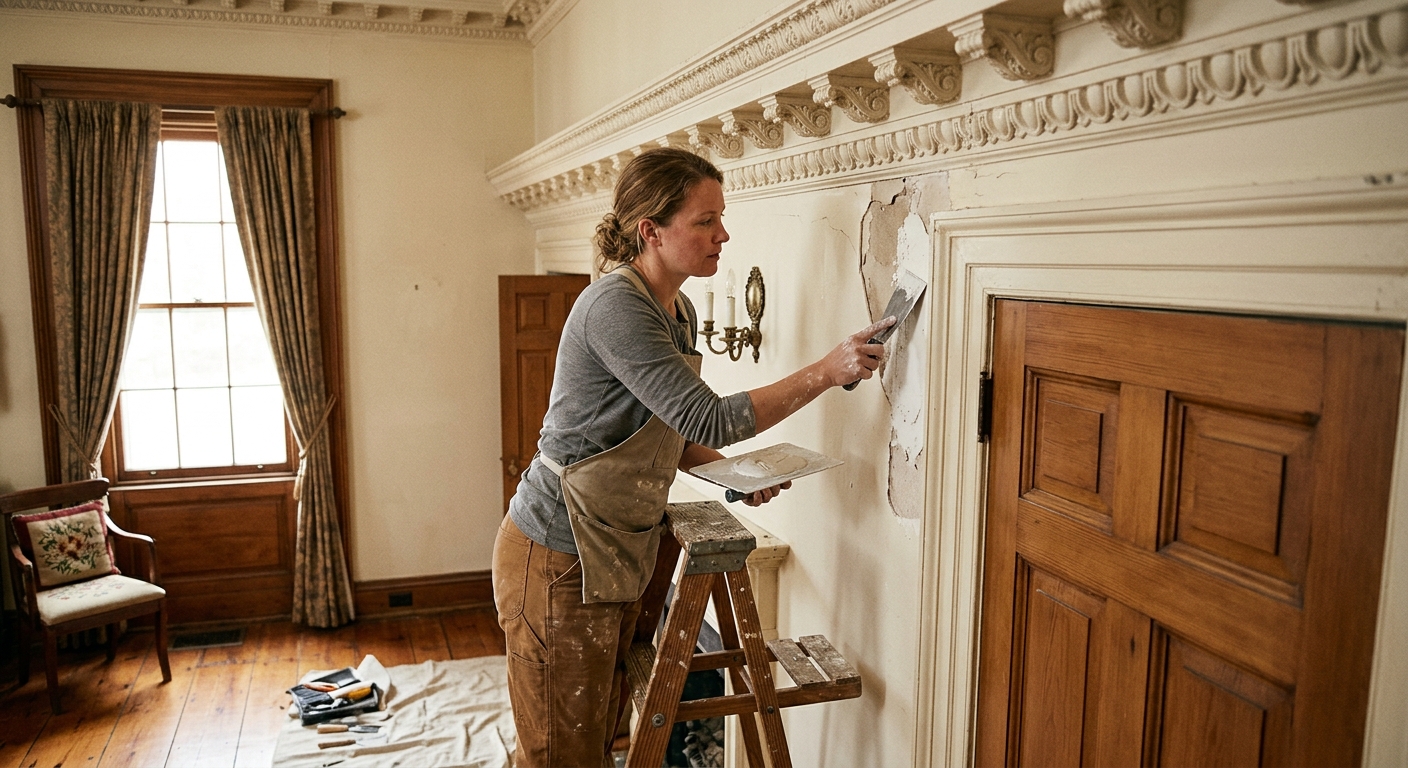
Historic interior preservation often involves more than paint. Many Portland homes built in the early 20th century have original plaster walls — a material that behaves very differently from modern drywall. Plaster repair requires matching the original texture and composition, not simply skim-coating with joint compound.
Wallcovering restoration is another interior specialty that comes up frequently in historic work. Period-accurate wallpaper installation — including fabric-backed and commercial-grade wallcoverings — requires specific adhesive knowledge and surface preparation that differs from standard drywall installation. A restoration painter who also handles wallcovering can maintain visual continuity across a historic interior without bringing in a separate subcontractor.
Drywall repair in historic contexts means blending new work invisibly into old plaster profiles. That’s a different skill set than patching a modern home, and it’s one worth asking about directly when evaluating contractors. District Painting Co. handles both plaster-compatible repair and wallcovering installation as part of its interior restoration services — details available at districtpaintingco.com.
Historic Building Code and Intumescent Fireproofing
When historic buildings are rehabilitated for commercial use — or when they undergo significant structural changes — local building codes may require fire-resistance upgrades. Intumescent fireproofing is a coating-based solution that expands under heat to insulate structural steel or wood, slowing the spread of fire without requiring major demolition.
This is relevant to historic restoration because intumescent coatings can be applied to exposed structural elements in a way that preserves their visual character. It’s a code-compliance tool that a general painter won’t carry, but that a restoration-focused contractor with commercial experience should be able to specify and apply correctly.
A Realistic Restoration Process, Step by Step
A well-managed historic restoration project follows a clear sequence. First comes assessment — identifying the substrate, existing coatings, lead paint presence, and any structural issues. Second is abatement, if lead paint is present. Third is surface preparation: cleaning, scraping, sanding, and priming with compatible materials. Fourth is repair work — plaster, wood, or masonry as needed. Fifth is the finish coat application, using period-appropriate materials where specified. Finally, documentation: photos and records that satisfy preservation guidelines or owner requirements.
Projects that skip steps — jumping from cleaning straight to painting — tend to fail early and cost more to fix than they saved. A restoration painter worth hiring will walk you through this sequence before the project starts, not after problems appear. See the full range of services District Painting Co. offers at districtpaintingco.com.
One Misconception Worth Correcting
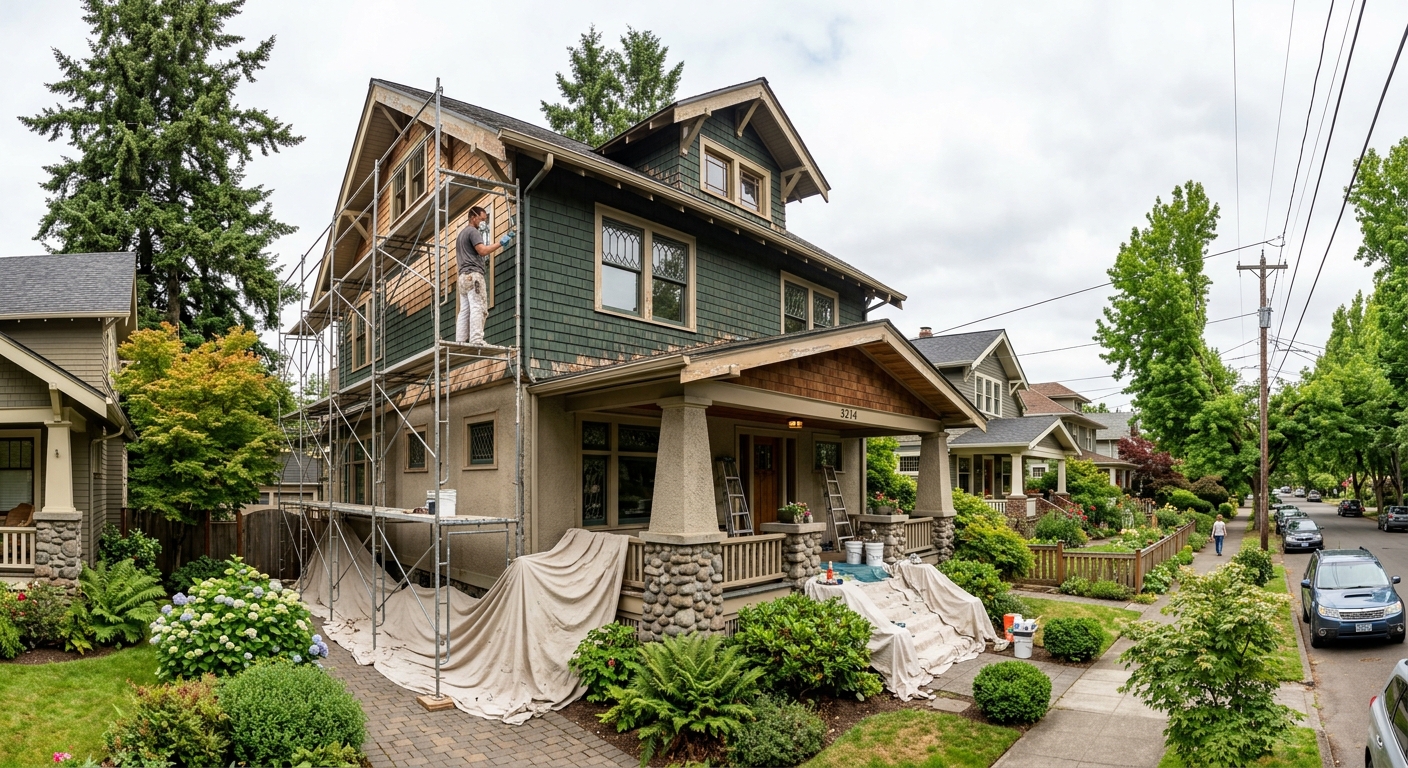
Some property owners assume that a painting contractor is only useful for a single project — hire them, get the work done, move on. Historic properties rarely work that way. Buildings in Portland’s wet climate need ongoing attention: touch-ups after harsh winters, periodic cleaning, and re-coating on a cycle that matches the material used.
A restoration painter who understands your building’s history and the materials already on it is far more valuable over time than a new contractor who has to start from scratch each time. Relationship-based work — where the contractor knows the property — produces better outcomes and fewer surprises on historic structures.
Talk to a Certified Restoration Painter in Portland
District Painting Co. is Oregon Parks certified, EPA Lead-Safe certified, and COBID-certified (ESB #11884), with eight years of restoration work across Portland’s historic neighborhoods. If you have a historic property and want to talk through what the project actually involves, call 503-560-7662 or visit districtpaintingco.com.
