
Portland Industrial Metal Painting: A Complete Process Guide
Industrial metal painting is a multi-stage coating process applied to structural steel, equipment, piping, railings, and fabricated metal components. Done correctly, it protects against corrosion, chemical exposure, and mechanical wear — and it lasts for years. Done incorrectly, it fails within months, usually starting at the edges and welds where prep was skimped. This guide walks through every stage of the industrial metal painting process Portland OR facilities and contractors should understand before a project begins.
Whether you’re managing a warehouse, a manufacturing facility, a bridge structure, or an HOA with metal fencing, the fundamentals are the same. The coating system only performs as well as the surface beneath it.
Why Metal Painting Requires a Different Approach Than Wood or Drywall
Metal surfaces are non-porous and often contaminated with mill scale, rust, oils, or oxidation. Standard latex paints designed for drywall or wood will not bond reliably to bare metal. Industrial coatings — epoxies, alkyds, urethanes, zinc-rich primers — are formulated specifically for metal substrates and the stresses they experience.
Metal also expands and contracts with temperature changes. Portland’s wet winters and dry summers create real thermal cycling on exterior metal. A coating system that doesn’t account for this flexibility will crack and delaminate, letting moisture in at the break points.
This is why the industrial metal painting process is a system, not a single product. Each layer has a specific job: adhesion, corrosion inhibition, build, and finish protection.
Stage 1 — Surface Preparation for Industrial Metal Painting
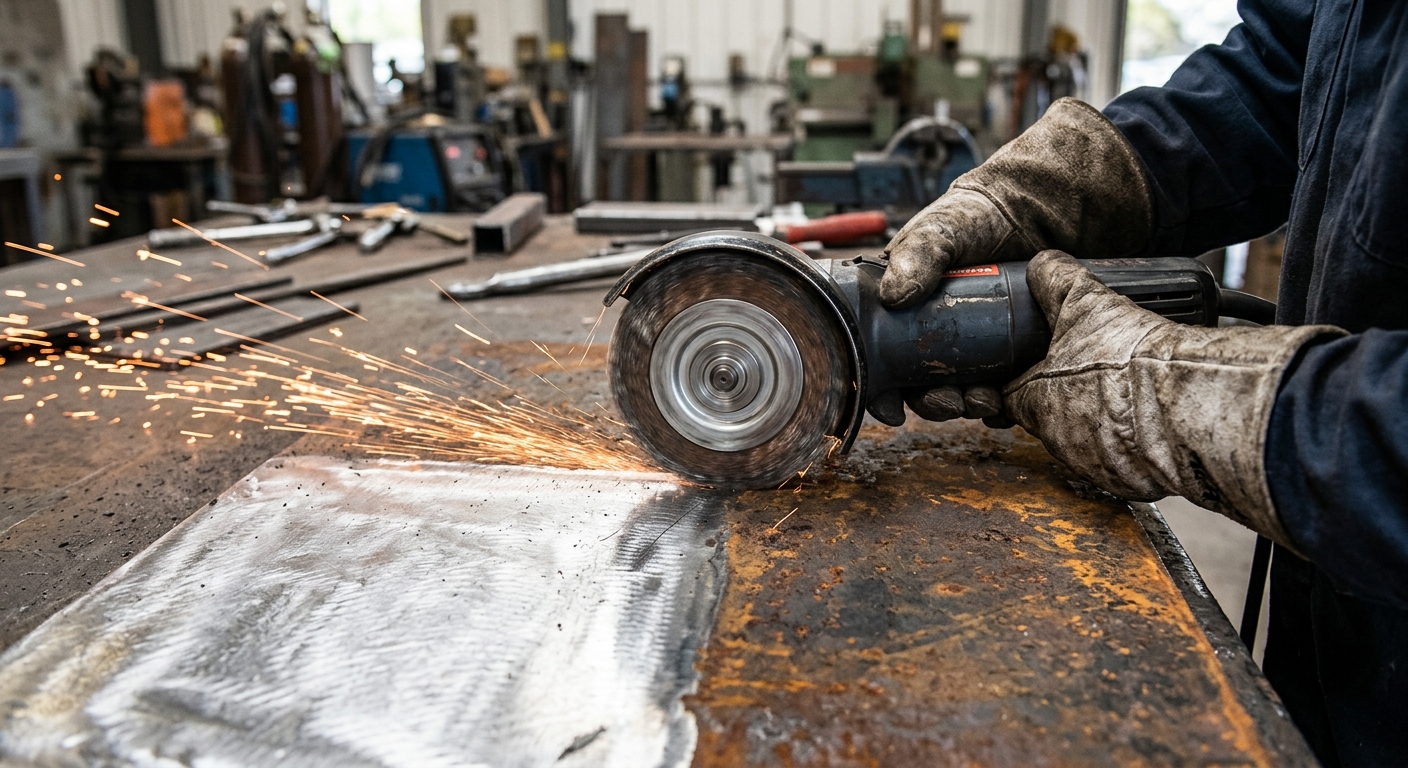
Surface preparation is the most critical variable in any industrial metal painting project. The Steel Structures Painting Council (SSPC) — now part of AMPP — has established standardized cleanliness grades for metal surfaces. The most common you’ll encounter are SP-6 (commercial blast), SP-10 (near-white blast), and SP-11 (power tool cleaning to bare metal).
For most Portland commercial and industrial projects, the specification will call for SP-6 or SP-10 abrasive blasting. This removes mill scale, existing coatings, rust, and surface contaminants, while also creating a surface profile — a microscopic roughness measured in mils — that gives the primer mechanical adhesion.
When abrasive blasting isn’t feasible (confined spaces, occupied buildings, or environmental constraints), power tool cleaning to SP-11 is the alternative. Hand wire brushing alone, which some contractors still use, rarely achieves adequate cleanliness for industrial-grade coatings.
Portland’s climate adds a complication: flash rusting. When bare metal is exposed to the region’s humidity before primer is applied, surface rust can form within hours. Proper sequencing — blast and prime the same day — prevents this from undermining your prep work.
Stage 2 — Primer Selection and Application
The primer’s job is corrosion inhibition and adhesion. For industrial metal painting in Portland OR environments, zinc-rich primers are the standard choice on structural steel. They work through galvanic protection — the zinc sacrifices itself to protect the steel beneath, similar to how hot-dip galvanizing works.
Epoxy primers are common on equipment and piping where chemical resistance matters more than galvanic protection. Moisture-cured urethane primers are useful in Portland’s wet season because they actually cure faster in high humidity, making them practical for exterior steel work in fall and winter.
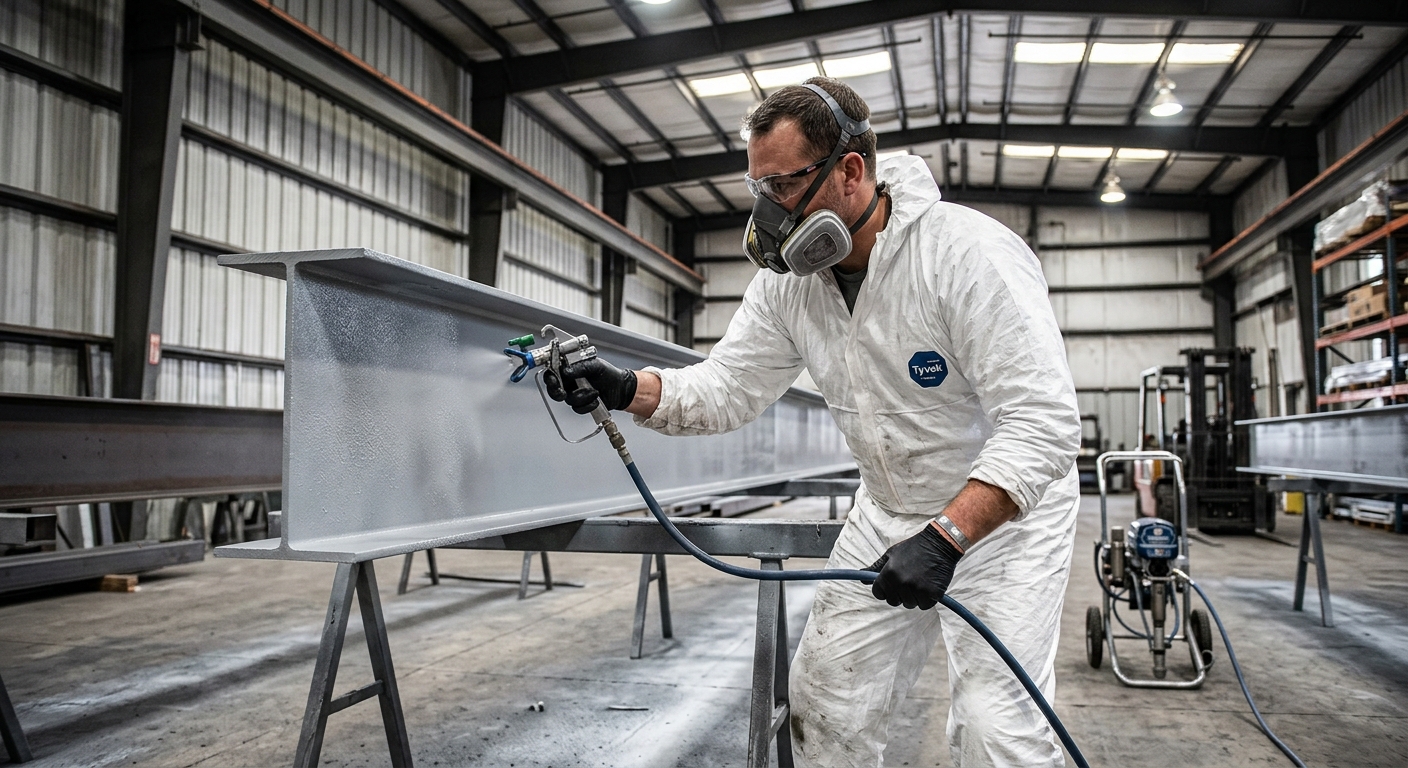
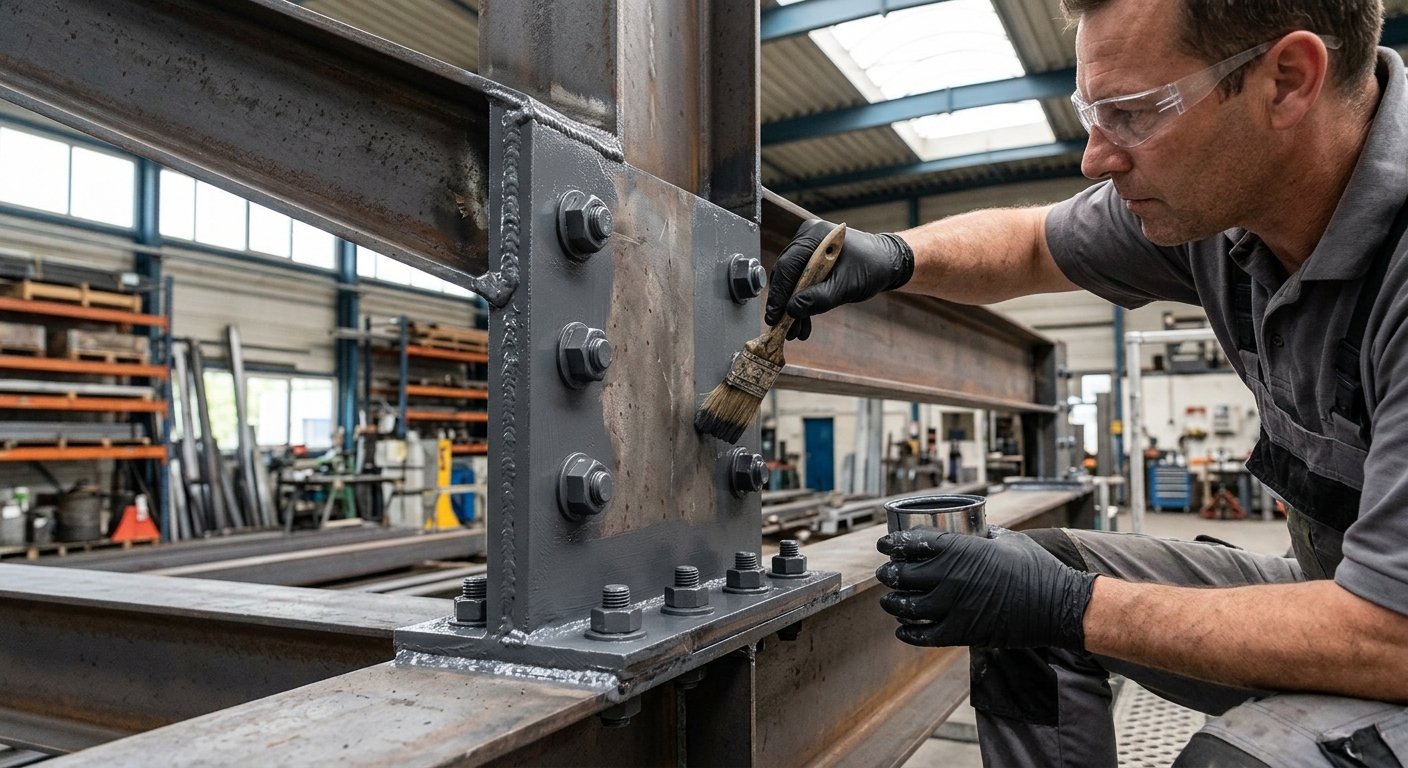
Application method matters. Airless spray delivers consistent film thickness across large structural members and complex geometries. Brush and roller application is reserved for stripe coats — a dedicated pass applied by brush to all edges, welds, bolts, and corners before the full spray coat goes on. Edges shed film thickness under spray; stripe coating ensures those high-risk areas get adequate coverage.
Stage 3 — Intermediate and Finish Coats
Most industrial coating systems are two- or three-coat systems. After the primer cures, an intermediate coat — often an epoxy build coat — adds film thickness and chemical resistance. The finish coat provides UV stability, color retention, and the final barrier against the environment.
Dry film thickness (DFT) is measured in mils (thousandths of an inch) using a calibrated gauge. Specifications typically call for total DFT in the 6–12 mil range for moderate-to-severe service environments. Under-application is a common failure point; it’s invisible to the eye but measurable, and it shortens service life significantly.
Recoat windows matter too. Each product has a minimum and maximum time between coats. Applying the next coat too soon traps solvents; waiting too long can require mechanical abrasion to restore adhesion. Industrial painting contractors who work from product data sheets rather than guesswork produce systems that perform as specified.
Special Considerations for Portland Industrial Projects
Portland’s regulatory environment adds layers to industrial metal painting work. Projects disturbing lead-containing coatings — common on older industrial equipment, bridges, and pre-1978 structures — require EPA RRP (Renovation, Repair, and Painting) compliance and, for commercial work, OSHA 1926.62 lead standards. This means air monitoring, containment, worker protection, and proper waste disposal. Not every painting contractor is equipped for this work.
Intumescent fireproofing is another category that overlaps with industrial metal painting. Intumescent coatings are applied to structural steel to achieve fire-resistance ratings — the coating expands when exposed to heat, forming an insulating char that delays structural failure. This work requires specific product certifications and application training, and it’s inspected by the Authority Having Jurisdiction (AHJ).
District Painting Co. handles both lead-safe work and intumescent fireproofing applications in Portland. These aren’t services most general painting contractors offer, which is a common misconception about what a painting company’s actual scope can include. The range of coatings technology — from zinc primers to intumescent systems to industrial epoxies — is far broader than residential paint.
For projects on public infrastructure or state-owned facilities, COBID certification (Certification Office for Business Inclusion and Diversity) can be a requirement. District Painting Co. holds COBID ESB #11884, which qualifies the company for Oregon public contracting work where certified business participation is specified.
Common Questions About Industrial Metal Painting
Does the process differ for interior versus exterior metal?
Yes, meaningfully. Exterior metal faces UV degradation, moisture, and thermal cycling, so finish coats need UV-stable chemistry — typically polyurethane or fluoropolymer topcoats. Interior metal in dry environments can use simpler alkyd or epoxy systems. Interior metal in wash-down environments (food processing, breweries) needs chemical-resistant epoxies rated for that exposure.
Can decorative or specialty finishes be applied to industrial metal?
Yes. Industrial metal surfaces can receive textured coatings, metallic finishes, and even custom color systems. Mural work on metal substrates is also possible — the surface prep and primer requirements are the same; only the finish coat changes. The industrial painting process is the foundation regardless of what the final appearance calls for.
How long does industrial metal painting last?
A properly specified and applied industrial coating system on structural steel should last 10–20 years in moderate service. Aggressive environments — coastal, chemical, or high-humidity — shorten that range. Skipped prep work or under-applied film thickness can reduce service life to two or three years. The specification and execution matter more than the brand of paint.
What to Look for in a Portland Industrial Metal Painting Contractor
Ask any contractor you’re evaluating whether they work from product data sheets and project specifications, or whether they select products based on familiarity alone. Ask how they measure and document dry film thickness. Ask whether they perform stripe coats as a standard practice or only when specified.
Verify that they hold an active Oregon contractor license — District Painting Co. holds Oregon License #222669 — and confirm their lead-safe certification status if the project involves older coatings. For public projects, confirm COBID or relevant certification eligibility.
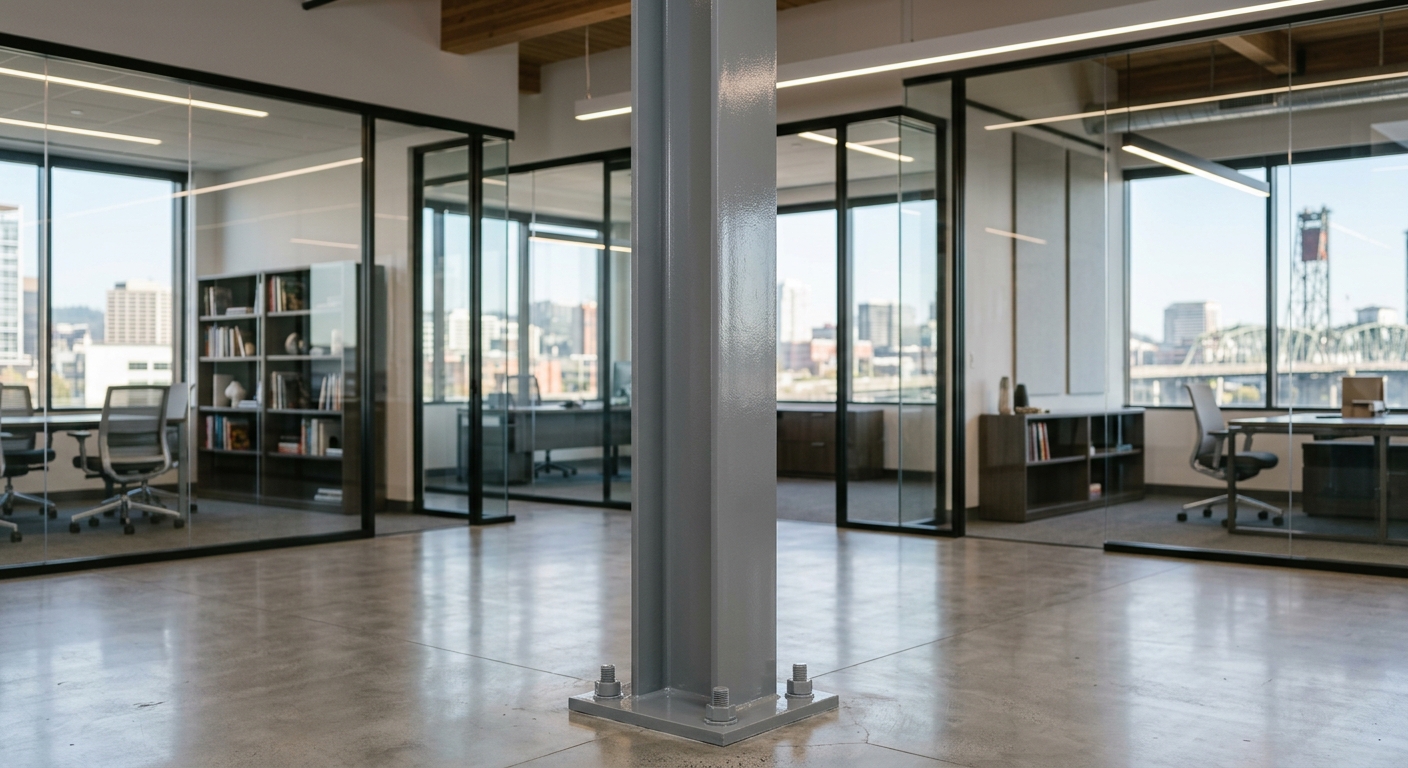
District Painting Co. has been working on commercial and industrial metal painting projects in Portland since 2018. The work ranges from structural steel in tenant improvement projects to historical restoration on metal components at Oregon state parks. That range of project types builds the kind of coating system knowledge that straightforward residential work doesn’t require.
If you want to understand the full scope of services available — beyond painting alone — visit the District Painting Co. homepage for a complete picture of what’s available, from pressure washing to intumescent fireproofing to wallcovering installation.
For industrial projects involving lead paint, learn more about District Painting Co.’s lead-safe certified services and how compliance is handled from containment through disposal.
General contractors and facility managers looking for a certified partner on public or commercial work can review District Painting Co.’s COBID certification and commercial capabilities before reaching out.
Talk Through Your Industrial Metal Project
If you have a metal painting project in Portland — structural steel, equipment, fencing, or anything more complex — District Painting Co. is available to discuss the right coating system for your conditions. Call 503-560-7662 to speak with someone who can give you a straight answer about what your project actually needs.
