
Portland Intumescent Fireproofing: What Buildings Need
Intumescent fireproofing is a passive fire-protection coating applied to structural steel that expands when exposed to heat — forming a thick, insulating char layer that slows heat transfer and delays structural failure. If you’re planning a commercial build-out, tenant improvement, or steel structure renovation in Portland, there’s a good chance your permit will require it. This article explains what the coating does, when it’s required, how application works, and what to expect from the process.
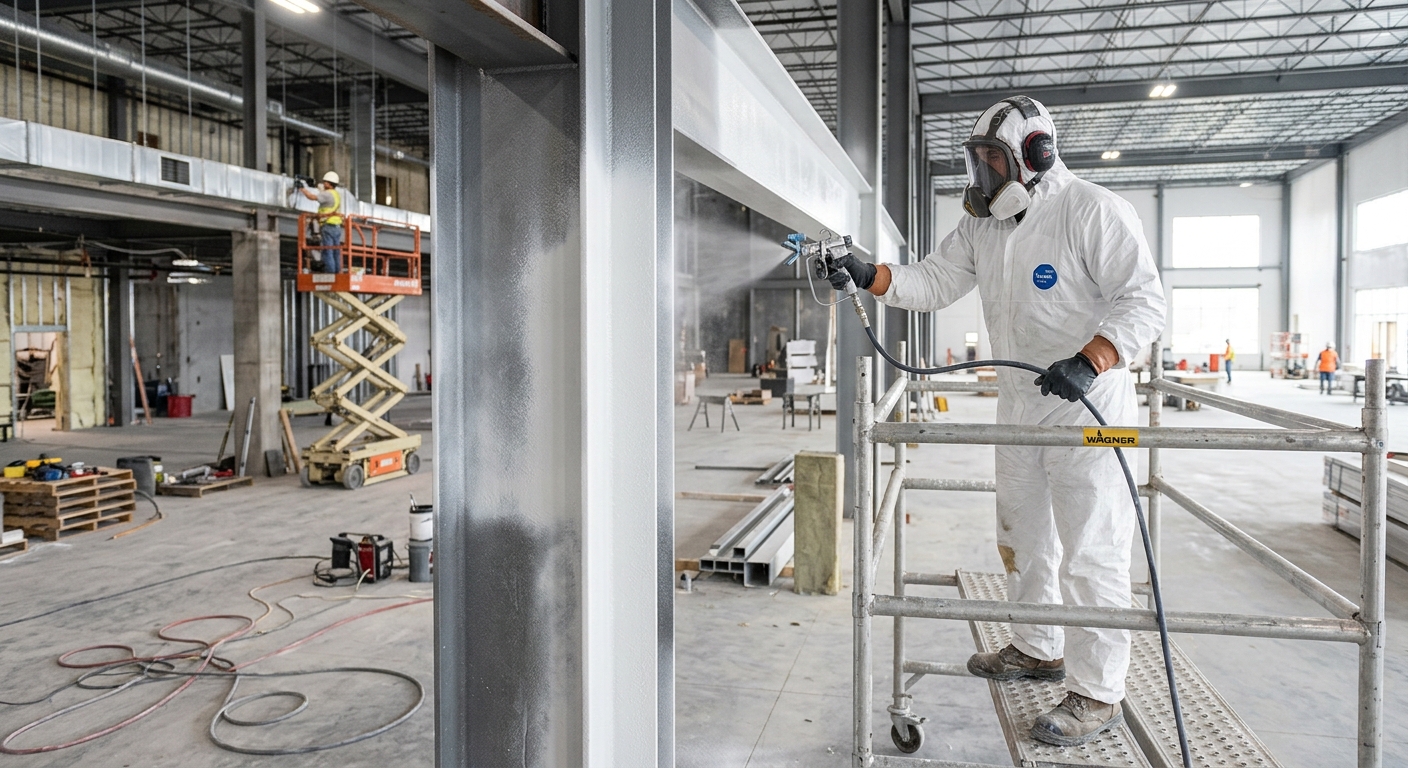
What Intumescent Coating Actually Does
Bare structural steel loses roughly half its load-bearing strength at temperatures around 1,100°F — a threshold a building fire can reach in under ten minutes. Intumescent coatings (the word means “to swell”) are engineered to react to that heat before the steel does. When temperatures climb past a trigger point, the coating expands to 25–50 times its original thickness, creating a low-density carbon foam that insulates the steel underneath.
The result is a fire-resistance rating measured in hours — typically 1, 2, or 3 hours depending on the product, dry film thickness, and the steel section being protected. Those ratings are tested and certified to ASTM E119, the standard fire-resistance test for building components. Your structural engineer and local building official will specify which rating is required for each element.
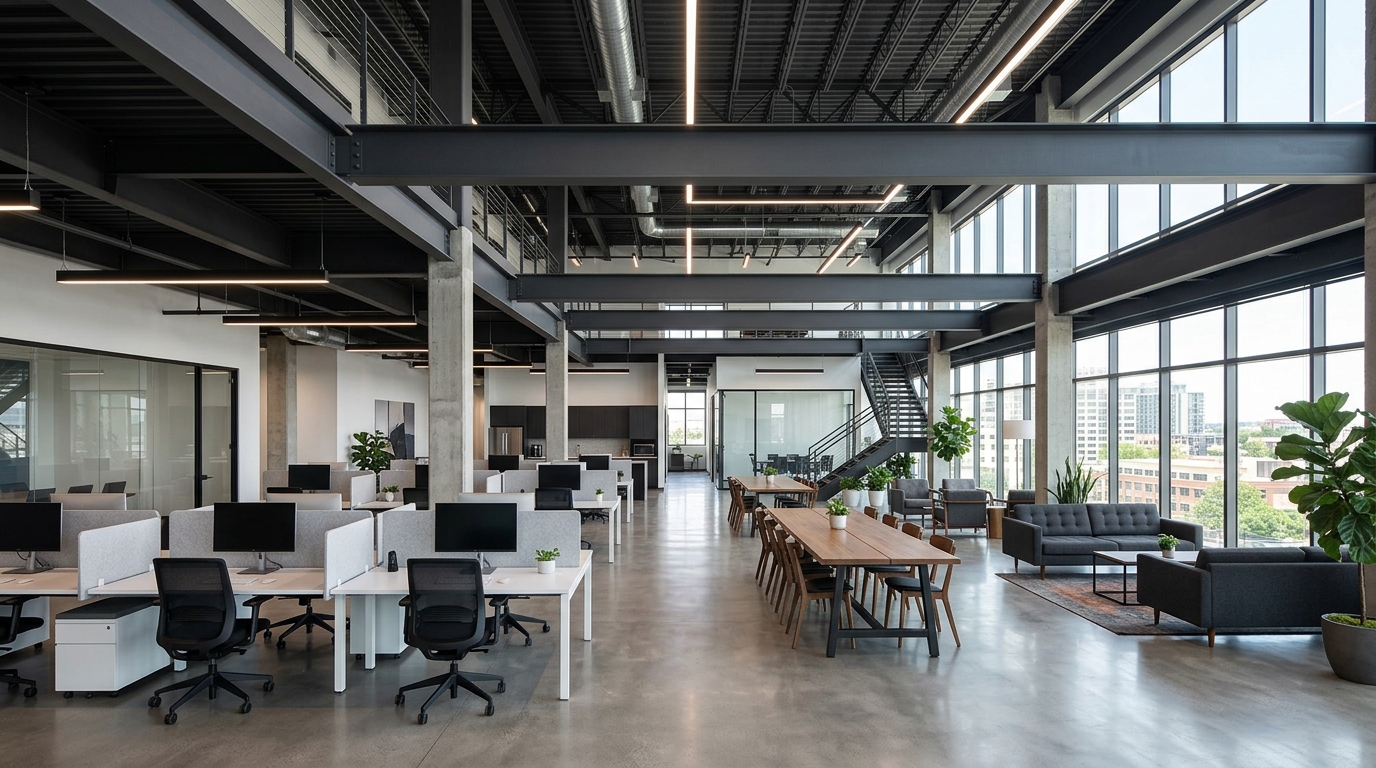
Unlike spray-applied fireproofing (SFRM), which has a rough, cementitious texture, intumescent coatings cure to a smooth, paint-like finish. That makes them the standard choice for exposed structural steel in architecturally visible spaces — lobbies, restaurants, open-plan offices, and anywhere the steel is meant to be seen.
When Portland Projects Require Intumescent Fireproofing Services
Oregon adopts and amends the International Building Code (IBC), which governs fire-resistance requirements for structural elements based on occupancy type and construction classification. Type I and Type II construction — steel-framed commercial buildings — routinely require fire-resistance ratings on columns, beams, and girders. If your project involves exposed steel in a Type III, IV, or V building with specific occupancy loads, the same requirement can apply.
Practically speaking, you’ll encounter intumescent fireproofing requirements most often in these Portland project types:
- Commercial tenant improvements with exposed steel ceilings or mezzanines
- New construction steel-frame buildings requiring rated assemblies
- Historic building renovations where exposed steel has been added or altered
- Parking structures and mixed-use developments
- Industrial facilities with high-bay steel framing
The specification comes from your structural engineer of record or the project architect — not the painting contractor. The contractor’s job is to apply the specified product to the specified dry film thickness (DFT) and document it correctly for the inspector.
How the Application Process Works
Intumescent fireproofing is not a standard paint job, and the application sequence matters. Here’s what a properly executed project looks like from start to finish.
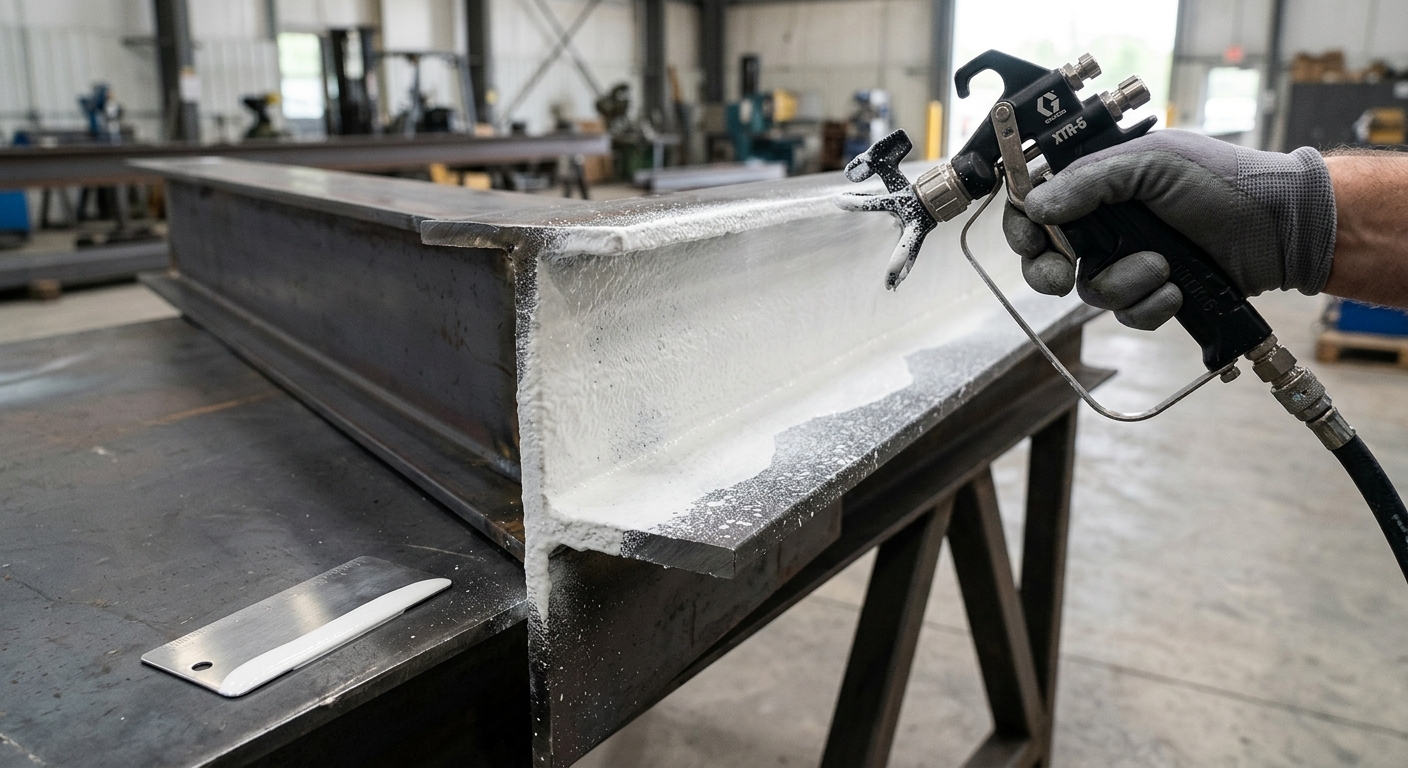
Surface preparation. Steel must be clean, dry, and primed with a primer that is compatible with the intumescent topcoat. Most manufacturers specify their own primer systems. Any mill scale, rust, or contamination left on the steel will compromise adhesion and void the product warranty. This step often involves abrasive blasting or power-tool cleaning to SSPC standards.
Primer application. The compatible primer goes on first and must cure fully before the intumescent layer is applied. Film thickness of the primer is measured and recorded.
Intumescent coat application. The intumescent material is typically spray-applied in multiple passes to build to the required DFT. That thickness is calculated based on the steel section factor (the ratio of the heated perimeter to the cross-sectional area) and the required fire-resistance rating. Thicker coatings are needed for slender sections; heavier sections need less. A wet film thickness gauge is used during application; a dry film thickness gauge confirms the cured result.
Topcoat. Most intumescent systems accept a compatible decorative topcoat, which is how exposed steel in a finished interior gets a consistent, architectural look while still meeting fire-resistance requirements.
Documentation. The applicator records DFT readings across all protected members and provides that data to the project inspector. Without documentation, the fire-resistance rating cannot be verified and the inspection will fail.

A Common Misconception Worth Addressing
Many people searching for intumescent fireproofing services in Portland assume they need to find a specialized industrial contractor — and are surprised to learn that a qualified painting contractor can perform this work. The confusion is understandable. Intumescent coatings are a coating system, and their correct application requires the same skills that govern any high-performance coating project: surface prep, product knowledge, film thickness control, and documentation discipline.
District Painting Co. applies intumescent fireproofing as part of a broader range of commercial and industrial painting services in Portland. The work sits alongside EPA Lead-Safe certified removals, historic restoration projects with Oregon State Parks, and tenant improvement coatings — all of which demand the same precision. The coating type changes; the standard of execution doesn’t.
What Affects Project Timeline and Cost
Two questions come up on nearly every fireproofing inquiry: how long will it take, and why does it cost more than standard painting?
Timeline depends on the square footage of steel to be protected, the required DFT (which determines how many coats and how much cure time between them), site access, and whether the work is sequenced around other trades. A single-floor tenant improvement with exposed steel beams might take two to four days. A multi-story new construction project can run several weeks. The cure time between coats is non-negotiable — rushing it produces a film that won’t perform correctly in a fire event.
Cost is higher than standard paint for several reasons. The materials themselves are significantly more expensive per gallon than architectural coatings. Application requires trained applicators who understand film thickness calculations and documentation requirements. And the prep standard — clean, primed steel with verified adhesion — is more demanding than a typical repaint. When a project calls for a certified fire-resistance rating, the cost reflects the liability and precision that rating requires.
For commercial projects in Portland that also involve broader scope — drywall repair, full interior painting, pressure washing, or lead paint abatement — bundling those services with a contractor who handles all of it tends to reduce coordination overhead and keep the schedule tighter. Learn more about the full range of commercial painting services available in Portland to see where intumescent work fits into a larger project.
Choosing a Fireproofing Applicator in Portland
When evaluating contractors for intumescent fireproofing services in Portland, ask these questions directly:
- Have they applied this specific product system before, and can they provide documentation from a prior project?
- Are they familiar with the steel section factor calculations that determine required DFT?
- Do they carry the licensing required in Oregon (License #222669) and understand local inspection requirements?
- Can they coordinate with the project’s structural engineer or architect on product submittals?
Intumescent fireproofing is one of those scopes where the inspection will catch shortcuts. A contractor who understands that — and documents accordingly — is the one worth hiring. The commercial coating work District Painting Co. performs across Oregon, Washington, and Idaho is built around that standard of documentation and accountability.
Talk to District Painting Co. About Your Portland Project
If your project involves exposed structural steel that requires a fire-resistance rating, District Painting Co. can review the specification and walk you through what application and documentation will look like. Call 503-560-7662 to talk through your scope.
