
Portland Exterior Painting: What the Job Really Takes
Exterior painting in Portland, OR is not just about choosing a color. The region’s wet winters, temperature swings, and aging housing stock — much of it built before 1978 — create conditions that punish shortcuts. A paint job done without proper prep or the wrong products for the Pacific Northwest climate can fail in two to three years. Done right, it should last eight to twelve.
This article walks through what a quality exterior paint project actually involves, what questions to ask before hiring anyone, and what factors drive cost and timeline in Portland specifically.
Why Portland’s Climate Makes Exterior Painting Different
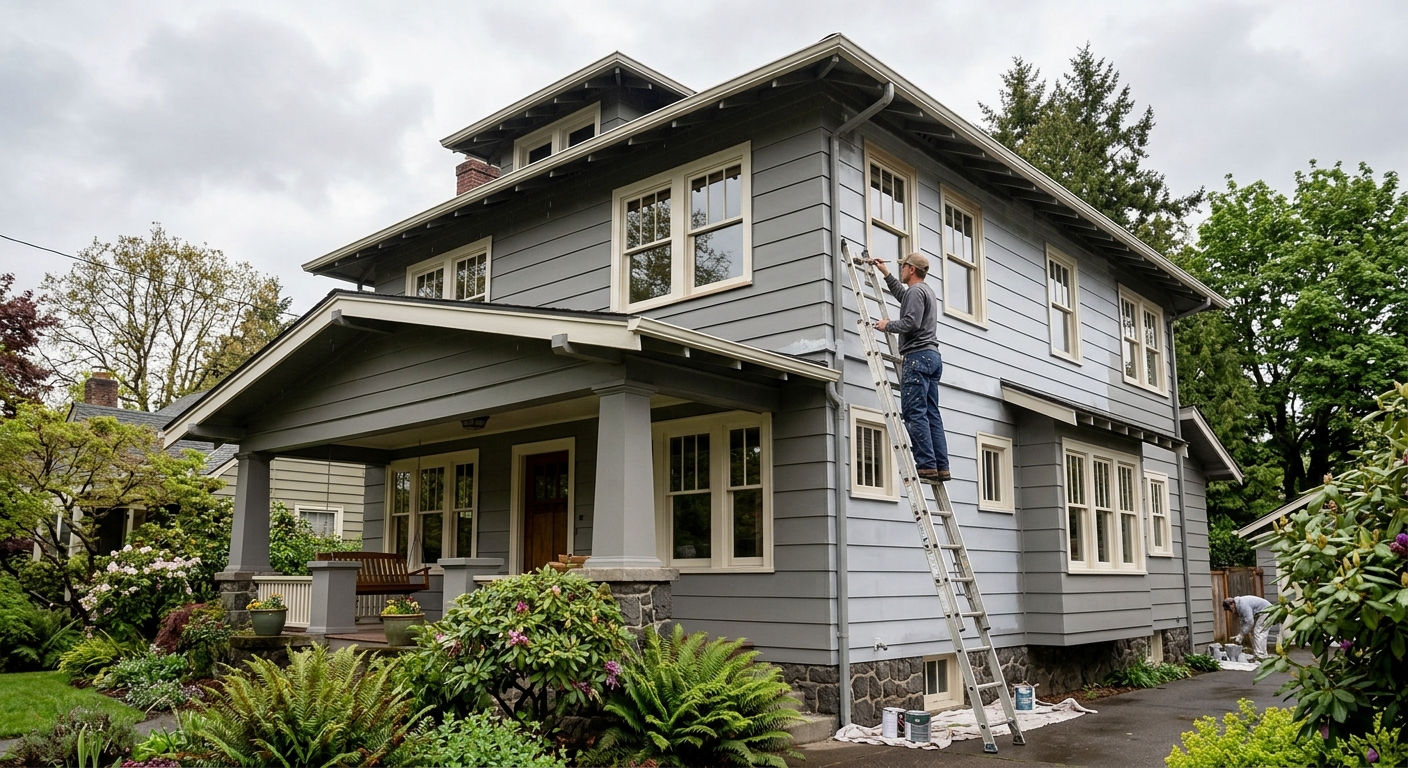
Portland averages around 144 rainy days per year. That moisture works against paint in two ways: it prevents proper adhesion during application, and it accelerates film failure on surfaces that weren’t sealed correctly. Painting over damp wood — even slightly damp — traps moisture beneath the coating and causes blistering within months.
The practical window for exterior painting in Portland runs roughly from late May through October, with the sweet spot being July through September. Temperatures need to stay above 50°F during application and for several hours afterward. Latex paints, which are standard for most residential exteriors, require those conditions to cure properly.
This seasonal constraint matters when you’re planning. If you’re hoping to paint in spring, you may be competing with every other homeowner who waited out the winter. Booking in late winter for a summer project is not premature — it’s realistic. For a deeper look at how Portland’s weather affects scheduling, Portland weather rules for exterior house painting covers the specifics in detail.
What Proper Exterior Prep Actually Involves
Preparation is where most low-bid jobs cut corners, and it’s the single biggest predictor of how long a paint job lasts. On a Portland home, thorough prep typically includes:
- Pressure washing — removes mildew, dirt, and chalking (the powdery residue left by oxidized old paint). Mildew is common on Portland homes, especially on north-facing or shaded surfaces.
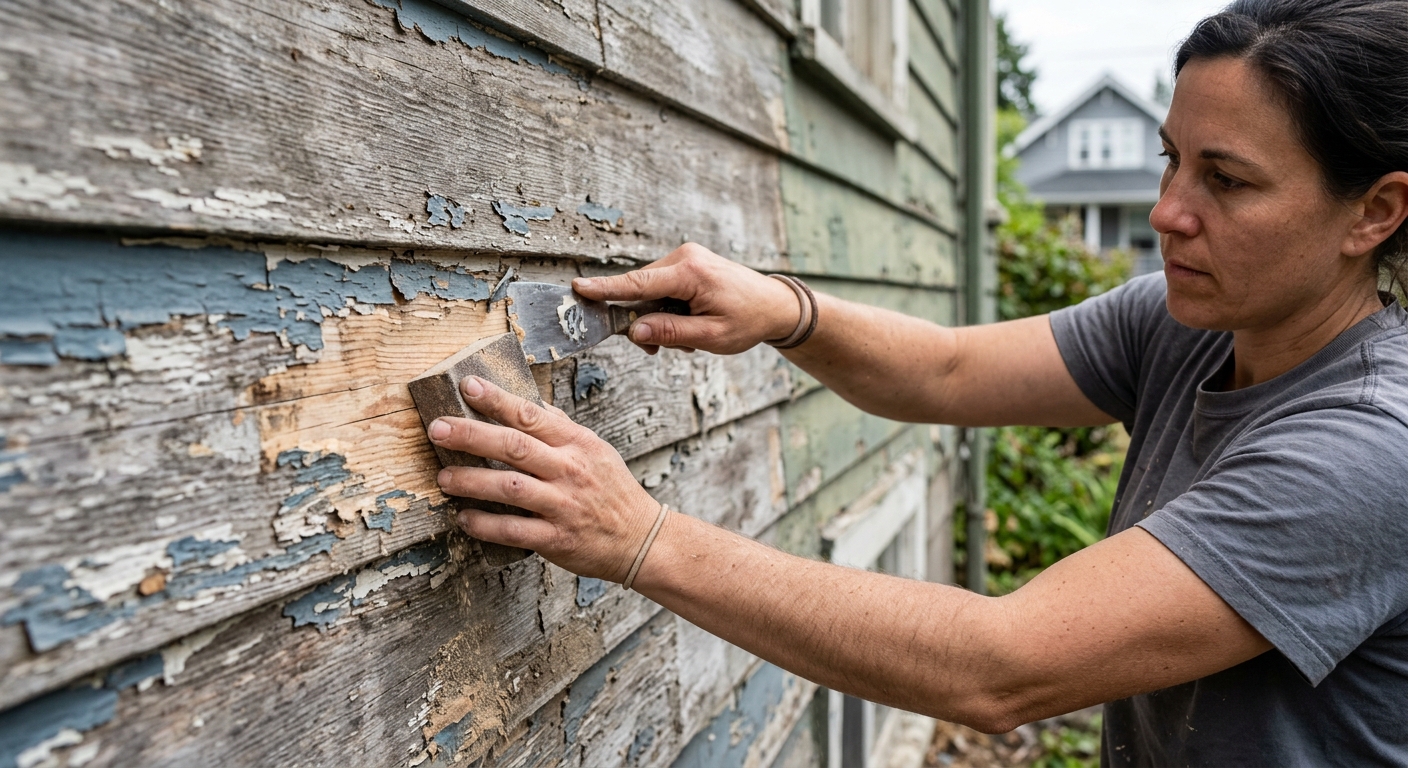
- Scraping and sanding — any loose or peeling paint must come off. Painting over it just delays the problem.
- Caulking — gaps around windows, trim, and siding joints are sealed to prevent water intrusion. Old caulk that’s cracked or separated needs to be removed before new caulk goes in.
- Priming — bare wood, repaired areas, and stain-prone surfaces need primer before topcoat. Skipping primer on bare wood is one of the most common causes of early paint failure.
- Drywall and surface repairs — wood rot, damaged siding boards, and cracked stucco should be addressed before painting, not after.
If a contractor’s quote doesn’t mention prep in any detail, ask specifically what it includes. A complete scope of work should spell out washing, scraping, caulking, and priming as line items.
Lead Paint: A Real Consideration in Portland Homes
Portland has a large stock of older homes. If your house was built before 1978, there is a meaningful chance it contains lead-based paint. Disturbing that paint through scraping or sanding without proper containment creates a health hazard — particularly for children and pregnant women.
The EPA’s Renovation, Repair, and Painting (RRP) Rule requires contractors working on pre-1978 homes to be Lead-Safe certified and follow specific containment and disposal procedures. Not every painting company in Portland holds that certification. Ask before signing anything. For homeowners dealing with significant lead paint issues, Portland lead paint abatement: what homeowners must know explains the process and your options.
Choosing the Right Paint for Pacific Northwest Exteriors
Not all exterior paints perform equally in Portland’s climate. The key properties to look for:
- Mildew resistance — critical in a wet climate. Most quality exterior paints include mildewcide, but formulations vary.
- Flexibility — paint that can expand and contract with temperature changes is less likely to crack. 100% acrylic latex paints handle this well.
- Film thickness — two coats of a quality product outperform three coats of a budget product. Dry mil thickness (the measurement of how thick the cured paint film is) matters more than the number of coats.
On historic or older homes with wood siding, linseed oil-based primers and paints are worth considering. They penetrate wood fibers rather than sitting on top, which improves adhesion and longevity significantly — especially on weathered or porous surfaces. This is a specialty application that not every contractor is familiar with.
What Exterior Painting in Portland Actually Costs
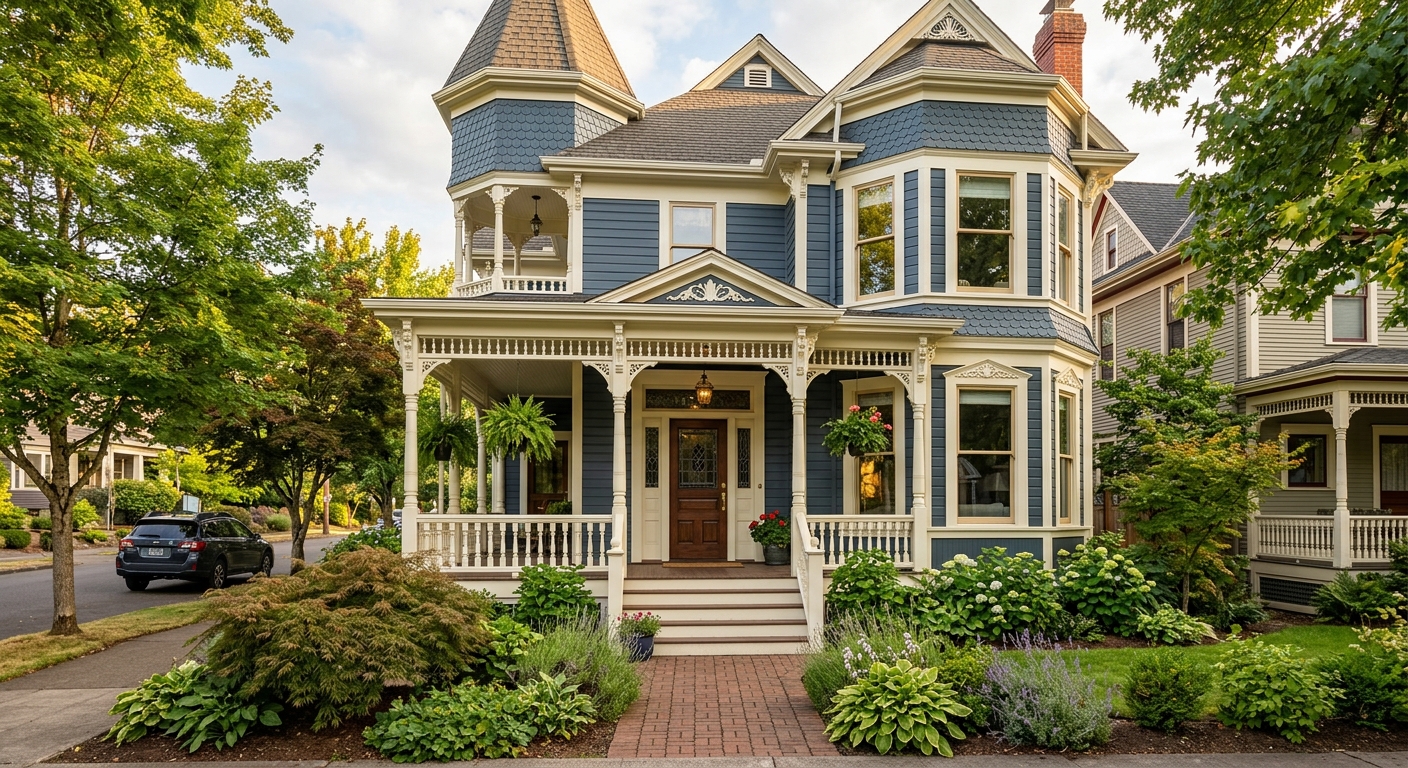
Cost varies widely based on square footage, surface condition, story height, and the complexity of trim and architectural detail. A straightforward single-story ranch with good existing paint condition will cost considerably less than a three-story Victorian with intricate millwork and failing paint throughout.
In Portland’s current market, a full exterior paint job on an average-sized home — including prep, prime, and two finish coats — typically ranges from $4,000 to $12,000 or more depending on those variables. That range is wide because the variables genuinely are wide. Be cautious of quotes significantly below the low end; they almost always reflect reduced prep or thinner paint application.
For a more detailed breakdown of what drives exterior painting costs in this market, Portland exterior house painting: real cost breakdown walks through the line items contractors are pricing when they quote a job.
Beyond Paint: What Exterior Projects Sometimes Also Need
One misconception worth addressing directly: many homeowners assume a painting contractor only handles paint. In practice, a full exterior project often involves services that go well beyond coating application.
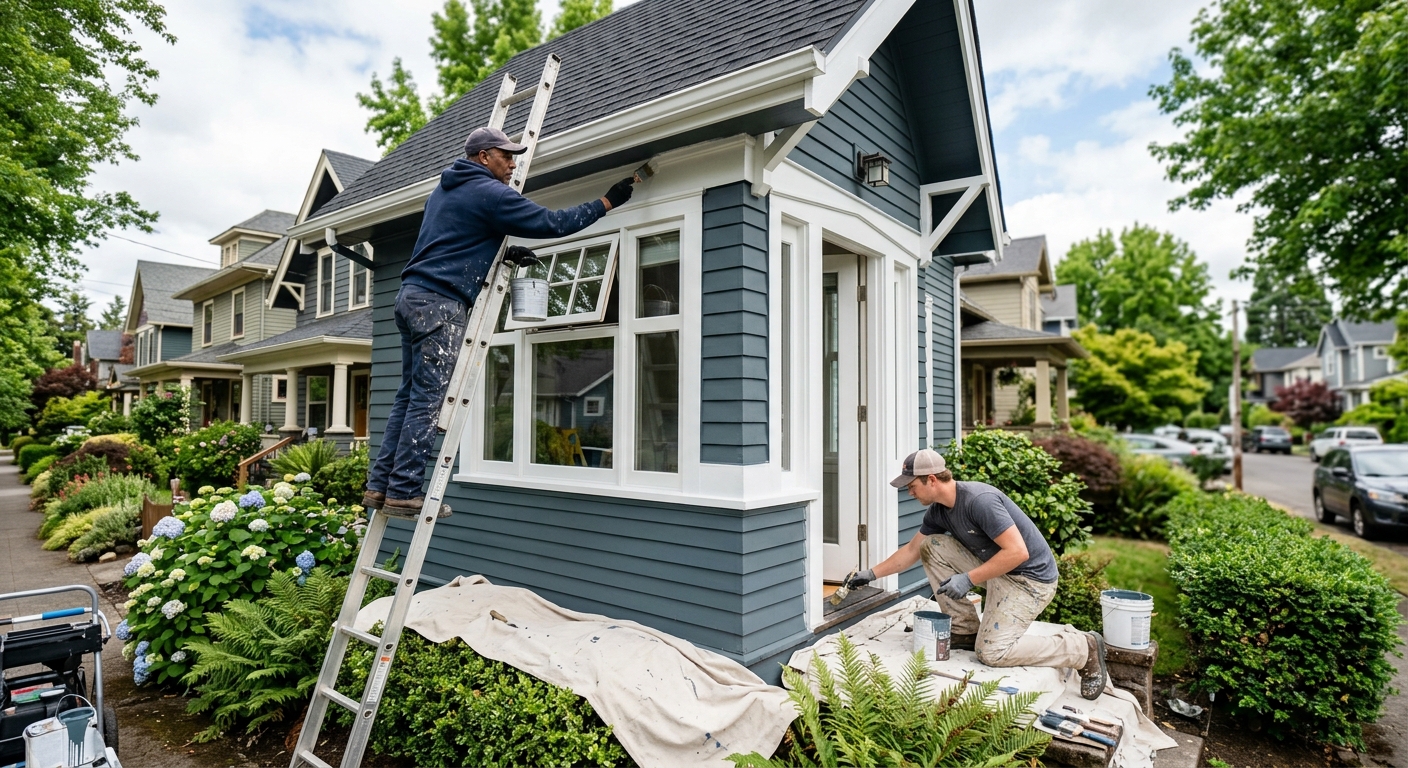
Rotted wood repair, drywall patching on stucco surfaces, deck refinishing, pressure washing, and caulking are all part of a complete exterior scope. Some contractors handle these in-house; others subcontract or simply exclude them. Knowing what’s included — and what isn’t — before work begins prevents surprises at the end of a job.
On commercial buildings, exterior scope can expand further to include specialty coatings, multi-story access equipment, and coordination with building management. The scope of what a qualified contractor can handle is often broader than people expect. You can see the full range of what exterior work involves at District Painting Co.’s exterior painting and deck refinishing services page.
How to Evaluate a Portland Exterior Painting Contractor
Before hiring anyone for exterior painting in Portland, confirm the following:
- Oregon CCB license — required for any contractor doing work over $2,000. You can verify a license on the Oregon CCB website.
- Lead-Safe certification — required for pre-1978 homes.
- Liability insurance and workers’ comp — protects you if something goes wrong on your property.
- Written scope of work — prep steps, products, number of coats, and warranty should all be in writing.
- References or documented work — photos of completed projects in Portland are more useful than generic reviews.
District Painting Co. has been doing exterior painting in Portland since 2018, holding Oregon License #222669 and EPA Lead-Safe certification. The work spans historic homes, commercial buildings, and everything in between — and the prep process doesn’t get abbreviated regardless of project size.
Talk to District Painting Co. About Your Exterior Project
If you have an exterior painting project in Portland — residential or commercial, straightforward or complex — District Painting Co. is glad to take a look and give you an honest scope. Call 503-560-7662 or visit our exterior painting services page to get started.
