
Siding Staining in Portland: Services, Cost, and What Actually Lasts
Siding staining in Portland is a different job than staining a fence or a deck, and it’s a different job here than it would be in a drier climate. Wood siding is the largest continuous wood surface on most homes, it’s fully exposed to the weather on every elevation, and the cost of getting it wrong — trapped moisture, premature failure, uneven fade — is measured in whole-house recoats rather than touch-ups. This guide covers how siding staining works in the Pacific Northwest, which products hold up, what proper prep involves, what it costs, and how to tell a lasting result from one that fails in two seasons.
District Painting Co. has done exterior wood finishing across Portland since 2018 — siding, decks, fences, and trim — as part of how we approach the full exterior of a property. What’s below reflects what we’ve seen actually perform in Portland conditions.
Timing: When to Stain Siding in Portland
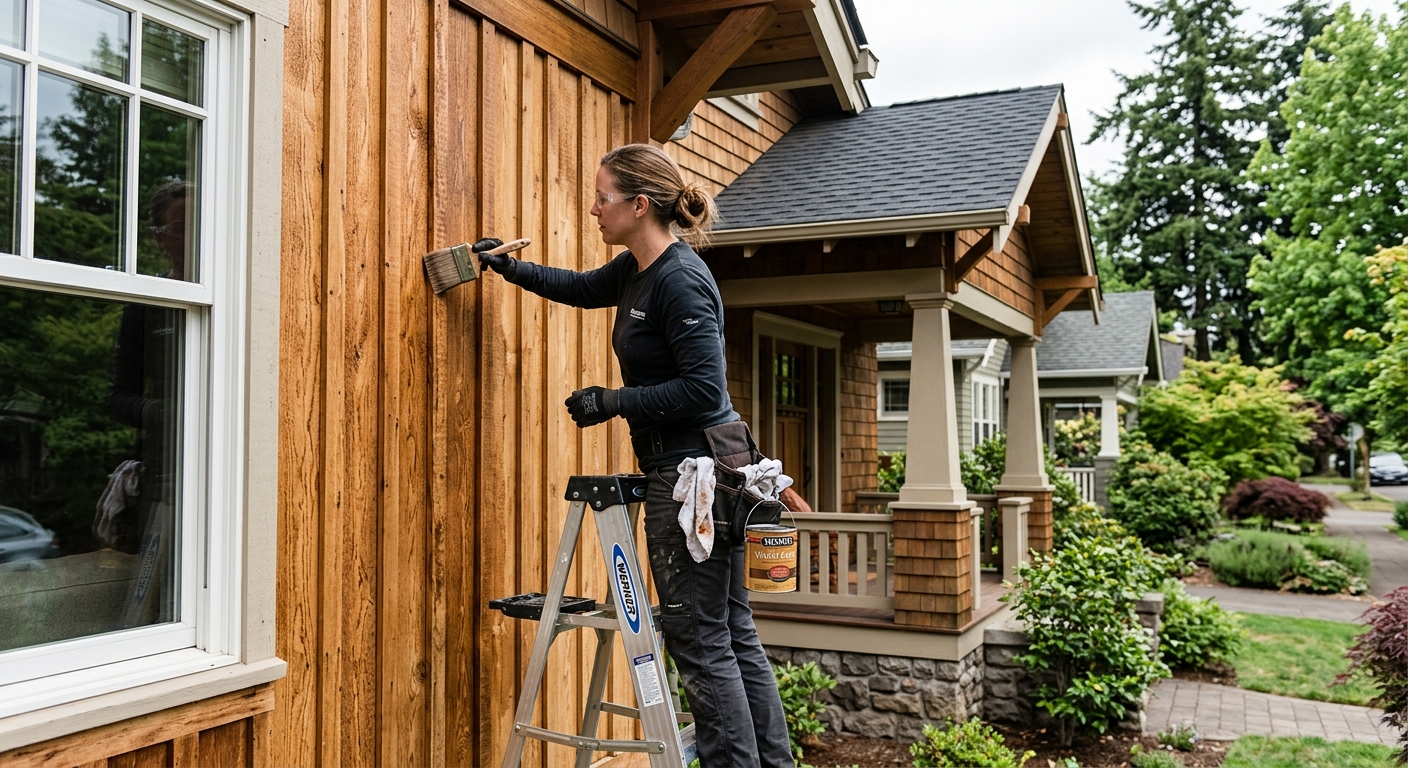
The workable window runs roughly late May through September, with surface temperatures between 50°F and 90°F, no rain forecast for 24 to 48 hours after application, and moderate humidity. Overcast days or early mornings are better than direct midday sun, which can flash-dry the stain and leave lap marks across a long wall. Because that window is narrow and contractors book up through June and July, getting on a schedule in early spring is the reliable way to hit it.
What Siding Staining Costs in Portland
Treat these as planning ranges — the only accurate figure comes from a walk-through, because siding condition varies enormously. As a general guide, professional siding staining in Portland typically runs $1.50 to $4.00 per square foot, with the spread driven almost entirely by preparation. New or well-maintained cedar that just needs washing and a single coat sits at the low end; weathered siding that requires stripping an old solid stain, extensive brightening, board repairs, and two coats runs to the high end.
The factors that move your number:
- Surface preparation — the biggest variable by far. Stripping a failing solid stain, heavy mildew remediation, or board replacement adds significant labor.
- Stain type and coats — semi-transparent on sound wood is often a one-coat system; solid stains usually need two coats, roughly doubling material and application time.
- Height and access — second- and third-story elevations, steep lots, and tight setbacks require ladders or lifts and slow the work.
- Product grade — the difference between a budget stain and a professional-grade product is usually $20–$40 per gallon, a small line item against the labor cost of recoating in two years instead of five.
That last point is the one worth internalizing: on siding, prep and product quality buy you years, and the cheapest bid usually reflects a thinner scope, not a better price for the same work.
How Long Siding Staining Lasts Here
On properly prepped cedar siding with a quality product, expect a semi-transparent stain to hold three to five years before it needs reapplication, and a solid stain four to six years before peeling becomes an issue. South- and west-facing walls in full sun fade faster; shaded north elevations hold color longer but face more mildew pressure. These timelines assume real prep — a premium stain applied over a poorly prepared wall will fail faster than a mid-grade stain applied correctly.
Prep Is Where Siding Projects Succeed or Fail
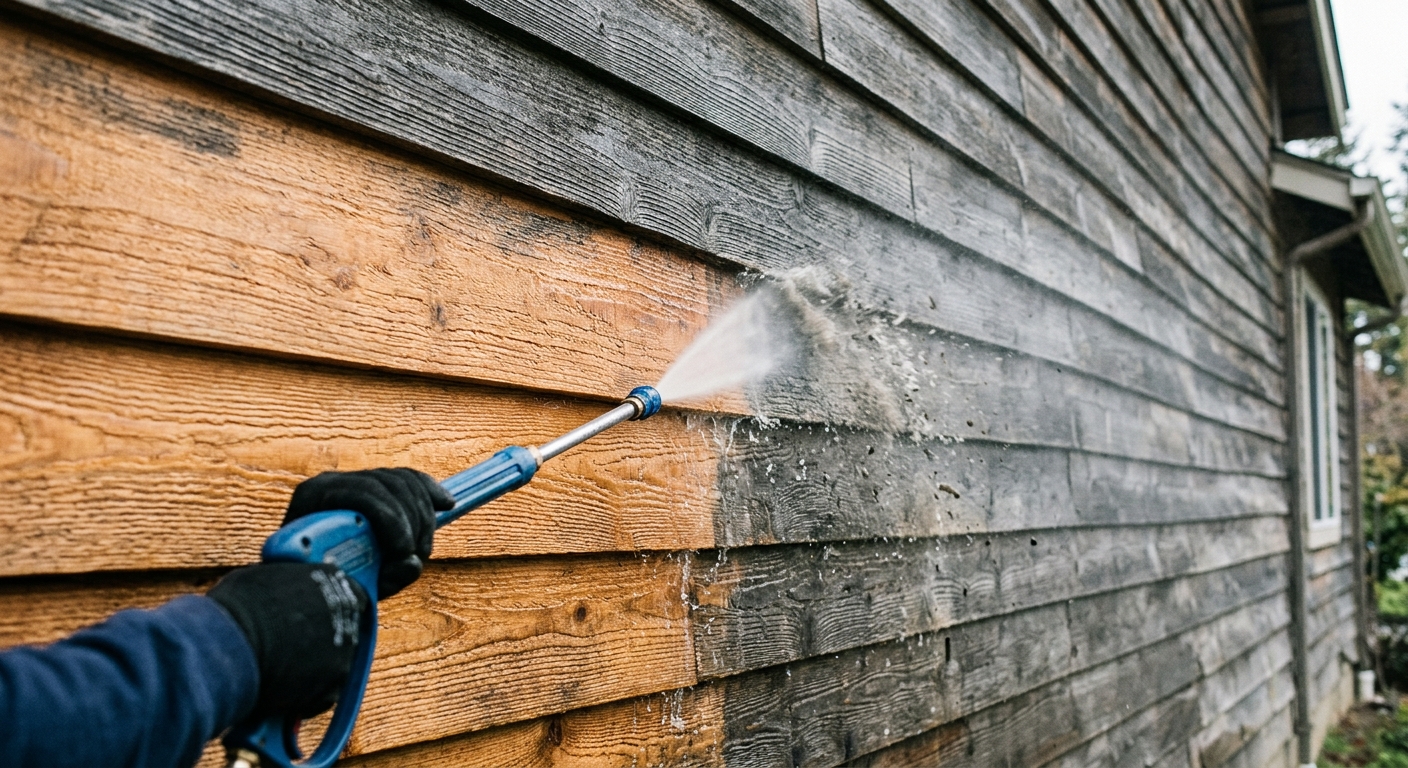
On a surface this size, prep is the majority of the labor and nearly all of the difference in how long the finish lasts.
Cleaning and brightening. Siding needs to be washed before any stain goes on — pressure or soft washing to remove dirt, mildew, and chalking, and on previously coated siding, sometimes a chemical stripper to remove failing stain so the new coat bonds. Oxalic-acid wood brighteners then restore the wood’s pH and open the grain for even absorption. This step is routinely skipped and it shows in the result.
Dry time. After washing, siding needs a stretch of dry weather — commonly 48 to 72 hours — before stain goes on. This is the constraint that makes Portland siding staining a spring-through-early-fall job; staining damp wood traps moisture and guarantees early failure.
Repairs and end grain. Boards with rot, deep checking, or loose knots should be replaced before staining, not covered over. End grain, board ends, and any exposed cut edges absorb far more stain than the face of the board and need extra attention — neglecting them is a common cause of uneven fade.
Why Portland’s Climate Makes Siding Staining Demanding
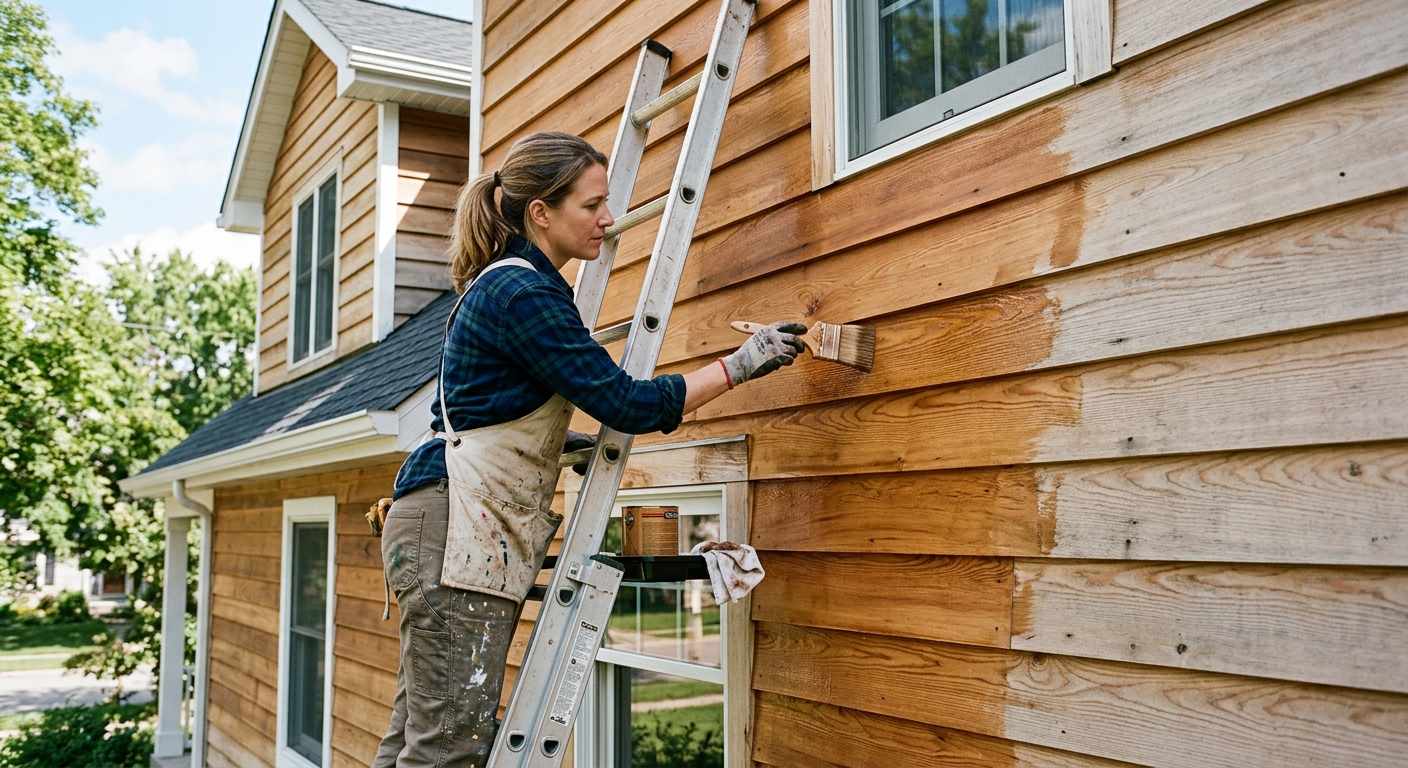
Wood siding lives through Portland’s full weather cycle every year: months of winter rain and damp air from October through April, then weeks of direct summer sun that dry the wood out fast. That repeated swelling and shrinking is what drives stain out of the grain over time — and it punishes any shortcut in product choice or prep.
Two things matter more here than almost anywhere else. First, mildew pressure is high — any stain used on Portland siding needs a mildewcide, or north-facing walls will show green and black discoloration within a single wet season. Second, the wood has to be genuinely dry before staining — typically below 15% moisture content — which narrows the workable window to the drier months. Cedar and Douglas fir, the two most common siding woods here, also behave differently: cedar is naturally rot-resistant and holds stain well, while denser Douglas fir is more prone to surface checking if it dries too fast.
Stain Types for Siding: Solid, Semi-Transparent, and Toner
Choosing the stain type is the most consequential decision in the project, because each behaves differently on a large vertical surface.
Solid stains work like a thin paint — they hide the grain and form a surface film with the most UV and moisture protection. On previously unstained siding they can look excellent for years, but that film eventually peels, and on siding with an old solid coating, adhesion and prep become the deciding factors.
Semi-transparent stains penetrate into the wood instead of sitting on top, showing the grain and the natural texture most Portland homeowners want. Because they don’t form a film, they don’t peel — they fade, which makes recoating far simpler and lets the wood breathe. For sound cedar siding in good condition, a quality semi-transparent stain is usually the best long-term choice.
Toners and clear finishes add little or no pigment, and pigment is what provides UV protection. A clear finish will let siding gray within a season or two; toners give a very natural look but need more frequent reapplication. On a large siding surface exposed to sun, more pigment generally means more protection and longer intervals between recoats.
Oil-Based vs. Water-Based on Siding
Oil-based stains penetrate deeper and have historically performed better on weathered, porous wood, but they carry higher VOC content — and Oregon’s tightening VOC rules have pulled some formulations off the shelf. Modern water-based stains have closed the gap dramatically; quality acrylic-based products now offer penetration and durability that rival oil, with easier cleanup, shorter dry times, and lower VOCs. For most Portland siding projects today, a high-quality water-based semi-transparent stain is the practical choice. The exception is very weathered, porous siding that’s gone gray and unprotected for years — that wood often drinks oil-based stain better.
Frequently Asked Questions
How much does it cost to stain siding in Portland?
As a planning range, roughly $1.50 to $4.00 per square foot, with preparation the biggest driver. Weathered siding needing stripping, brightening, and repairs costs more than sound wood that just needs washing and one coat. A walk-through and written estimate is the only reliable number.
Can you stain siding that’s already been painted?
Not without removing the paint first. Stain has to penetrate the wood to work, and paint forms a surface barrier that blocks penetration — stain applied over paint will sit on top and peel. Painted siding needs to be stripped before staining, or you continue with a solid stain or paint instead.
How often does siding need to be re-stained?
In Portland’s climate, a quality semi-transparent stain on cedar typically lasts three to five years, solid stains four to six. Sun exposure, wood type, and prep quality all shift that window.
Is siding staining something a painting contractor handles?
Yes — a full-service painting contractor handles all exterior wood surfaces, including siding, decks, fences, and trim. District Painting Co. treats siding staining as part of the whole exterior rather than a separate specialty, so it can be scoped alongside trim, decks, and any needed repairs under one contractor.
Work With District Painting Co. on Your Siding
District Painting Co. has done exterior wood finishing in Portland since 2018, and we approach siding as part of the full exterior of a home — not an afterthought. We’re licensed in Oregon, Washington, and Idaho (OR #222669), EPA Lead-Safe certified for older properties, and a COBID-certified small business, and our Best of the Rose City Silver Award reflects the kind of detail-oriented work that keeps clients calling back.
If your siding is due, the best time to get on the schedule is before summer fills up. We’ll walk the siding with you, tell you honestly what prep it needs, and recommend a product that holds up in the Pacific Northwest. Call (503) 560-7662 or reach out through our contact page to schedule a walkthrough and estimate.
For related exterior work, see our pressure washing services (the prep step siding staining depends on), our exterior painting services, and our guide to fence staining in Portland.
