
Wallcovering Installation for Portland Homes and Businesses
Wallcovering installation in Portland is a service that spans everything from a single residential accent wall to a full commercial tenant improvement across multiple floors. The process involves far more than hanging material — surface preparation, substrate repair, adhesive selection, and seam alignment all determine whether the finished result looks professional or fails within a year. This guide walks through what the process actually involves, what materials are available, and what to watch for in older Portland buildings before any wallcovering goes up.
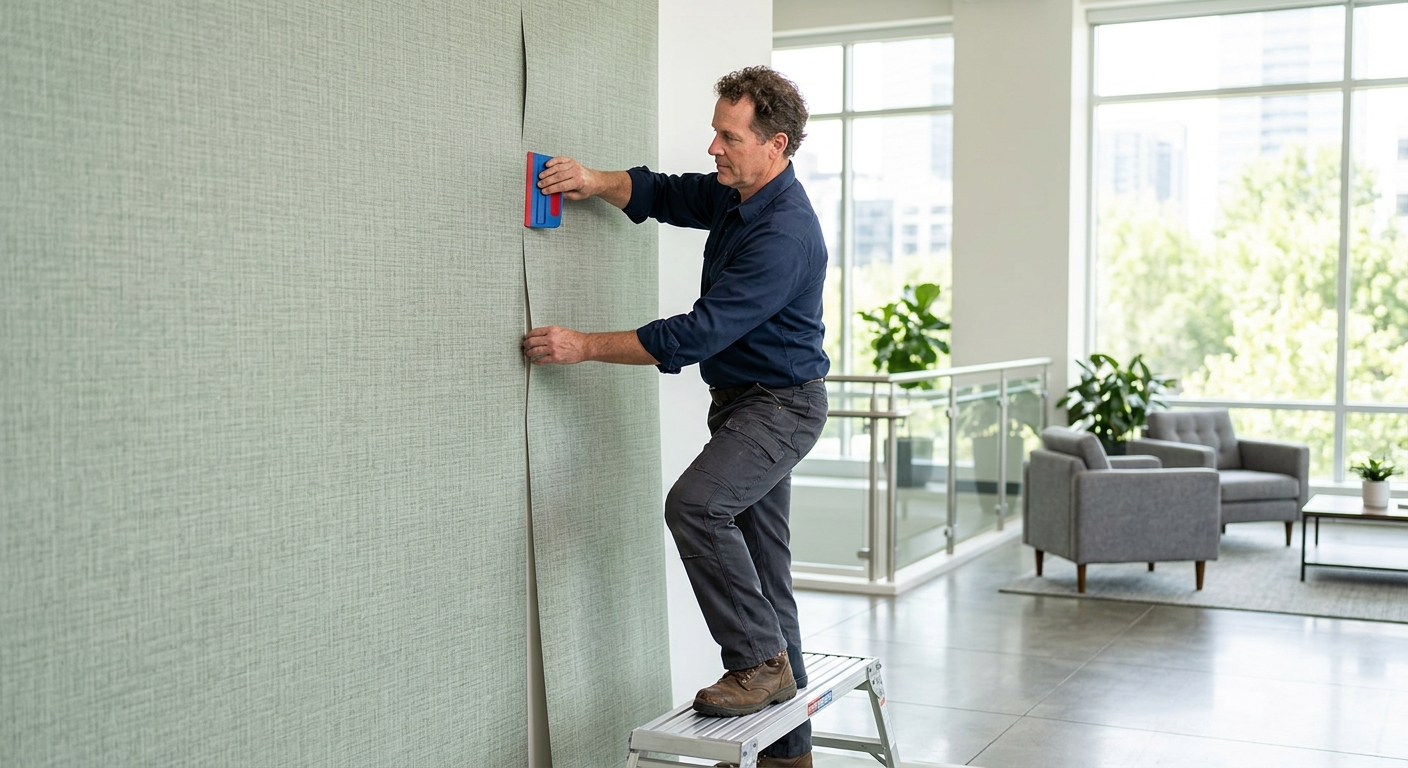
What Counts as Wallcovering — and What Type Do You Need?
Wallcovering is a broad category. It includes vinyl-coated paper, solid vinyl, fabric-backed materials, grasscloth, cork, acoustic panels, and specialty commercial grades. The two most common commercial designations are Type I and Type II vinyl wallcovering, classifications defined by the Wallcovering Association based on weight and durability.
Type I vinyl weighs 12–19 oz per linear yard and suits low-traffic areas like private offices or hotel guest rooms. Type II weighs 20–28 oz and is specified for corridors, lobbies, and healthcare environments where scrubbability and impact resistance matter. Choosing the wrong type for a high-traffic commercial space is one of the most common and costly mistakes on commercial wallcovering projects.
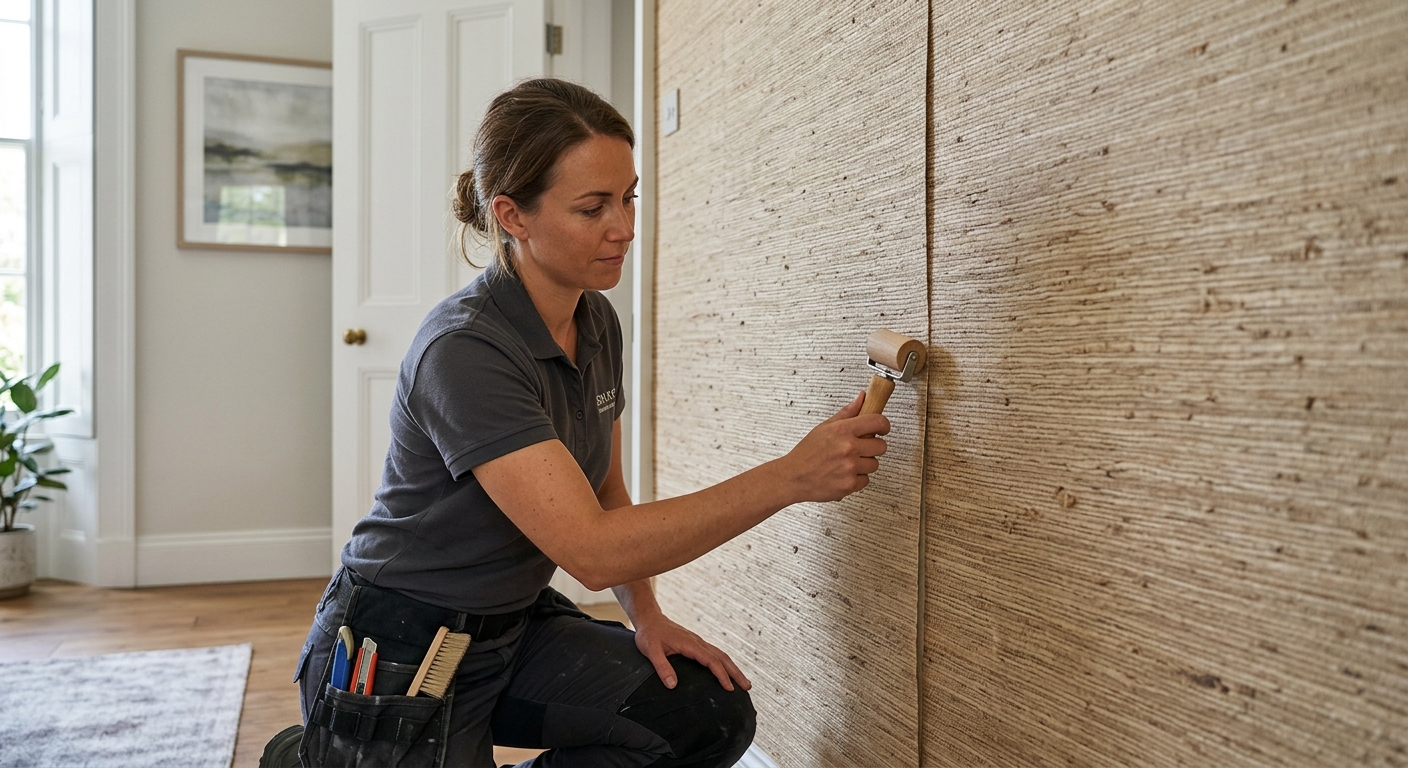
Residential projects open up a wider palette: grasscloth (woven natural fibers), fabric-backed textiles, and paper-backed specialty materials. Each has different handling requirements, expansion tolerances, and adhesive needs. Grasscloth, for example, requires careful seam placement because the seams are visible by design — misaligned seams on grasscloth are immediately obvious and cannot be fixed without removing and rehanging entire drops.
Surface Preparation: The Step That Determines Everything
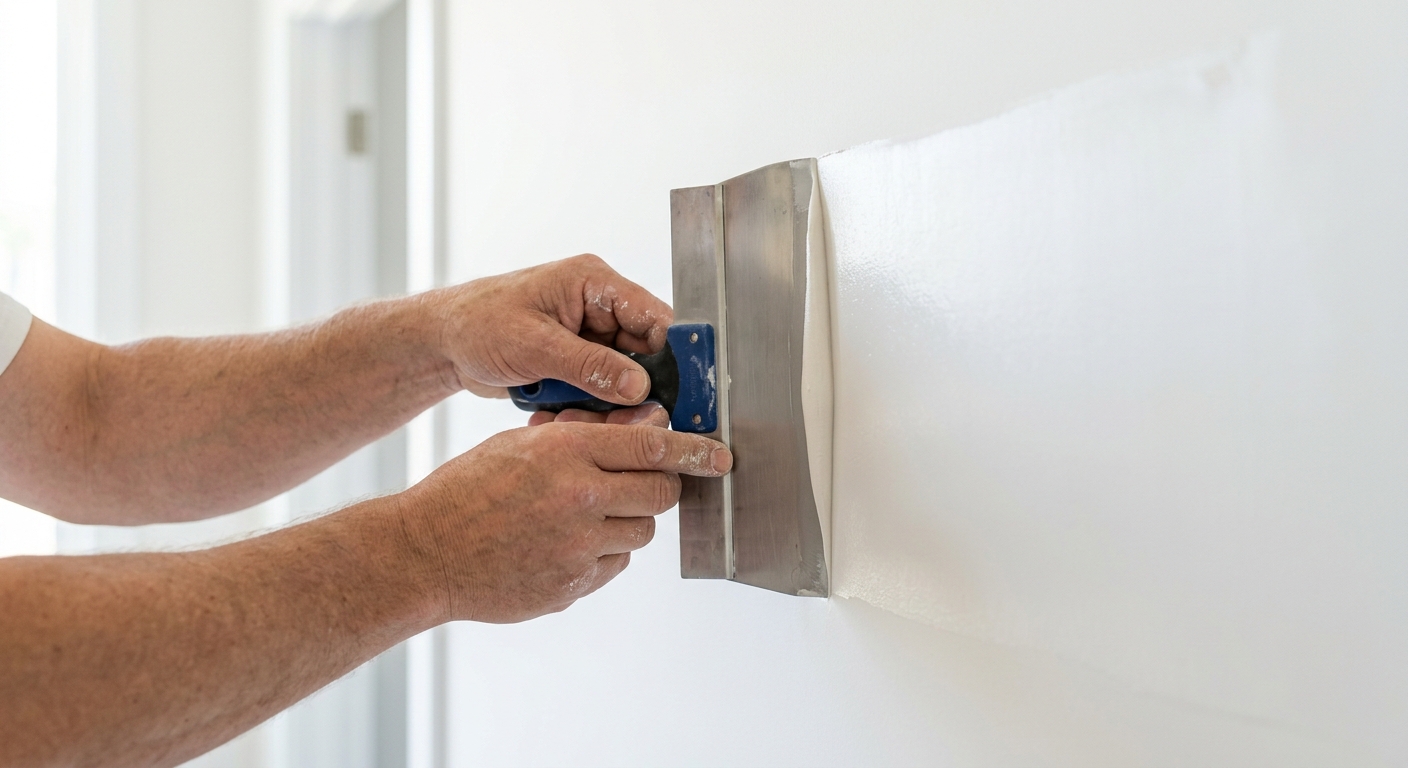
Wallcovering amplifies every flaw in the substrate beneath it. Paint ridges, drywall seams, nail pops, and uneven texture all telegraph through the finished surface, especially under raking light. Proper preparation is not optional — it is the majority of the labor on a quality installation.
The standard process begins with skim-coating the wall surface to achieve a Level 5 finish, the smoothest classification in the drywall finishing scale. Existing texture must be sanded or skim-coated flat. Seams, fastener dimples, and any damaged areas require compound, sanding, and priming before anything else happens. For commercial projects, walls are then primed with a wallcovering-specific primer that controls porosity and ensures consistent adhesive open time across the surface.
If you want a deeper look at what proper drywall preparation involves before a finish application, the article on Portland drywall repair and what to fix before you paint covers the substrate work that applies equally to wallcovering projects.
Lead Paint Considerations in Older Portland Buildings
Portland has substantial housing stock built before 1978, when lead-based paint was still in common use. If you are installing wallcovering over existing painted walls in a pre-1978 building, lead paint is a real consideration — not a formality.
Skim-coating and sanding disturb the existing paint layer. Without proper testing and containment protocols, that work can create lead dust exposure for occupants and workers. EPA RRP (Renovation, Repair, and Painting) rules require certified firms to follow lead-safe work practices in pre-1978 residential and child-occupied facilities. Any contractor doing surface prep in these buildings should be EPA Lead-Safe certified.
In some cases, existing wallcovering must be removed before new material goes up. Removal in a pre-1978 building can expose painted surfaces underneath — another point where lead testing matters. The full picture on what lead paint work involves in Portland is covered in the article on Portland lead paint removal and what homeowners must know.
Wallcovering in Historic Portland Buildings
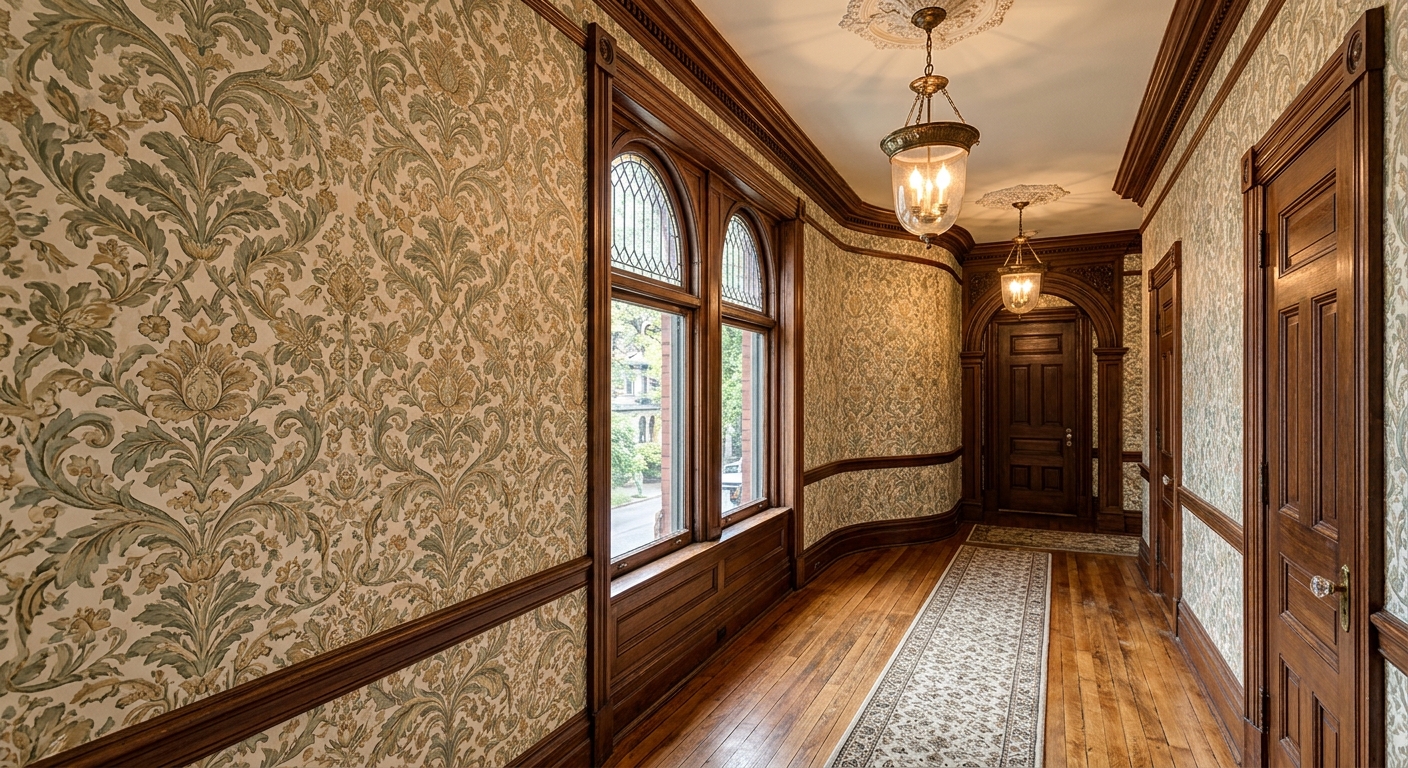
Period-appropriate wallcovering is a distinct discipline. Historic restoration projects — whether a Victorian-era home in Ladd’s Addition or a public building managed by Oregon State Parks — require material selection that matches the era’s aesthetic while meeting modern performance standards. This is not simply a matter of choosing a vintage-looking pattern.
Authentic restoration may call for paper-backed materials with specific repeat patterns, hand-trimmed edges, or natural fiber substrates that behave differently from modern vinyl. The adhesive system must be compatible with historic plaster substrates, which have different porosity and stability characteristics than modern drywall. Getting this wrong damages both the material and the substrate.
District Painting Co. holds Oregon Parks certification for historical restoration work — a credential that reflects direct experience with period-correct materials and the substrate conditions found in older Oregon buildings. That background applies directly to wallcovering selection and installation in historic residential and civic spaces. For more on what historic restoration painting involves in Portland, the article on Portland historic restoration painters explains the broader scope of that work.
Commercial Wallcovering Installation: A Different Scope
Commercial wallcovering installation differs from residential work in scale, specification, and coordination requirements. Tenant improvement projects often involve architect-specified products, submittal approval processes, and installation that must be sequenced around other trades. A contractor who only does residential hanging will not be familiar with these workflows.
Common commercial applications in Portland include hotel corridors and guest rooms, healthcare waiting areas and patient rooms, corporate office lobbies, and multi-family common areas. Each environment has its own performance requirements — moisture resistance in healthcare settings, acoustic performance in conference rooms, or simply a durable finish that holds up to daily contact in a busy corridor.
Acoustic wallcoverings — fabric-wrapped panels or textile materials with acoustic backing — are increasingly specified in open-plan offices and conference spaces. Installation requires precise panel alignment and, in some cases, substrate framing to achieve the acoustic performance ratings specified by the designer.
A Realistic Process Walkthrough
A professional wallcovering installation follows a consistent sequence. First, walls are inspected and any drywall damage is repaired. Surfaces are skim-coated to Level 5, sanded, and primed with a wallcovering primer. Material is measured and cut with pattern repeat accounted for — poor planning here wastes expensive material.
Adhesive is applied to the wall, the material, or both depending on product specifications. Drops are hung plumb using a laser level, not just a bubble level. Seams are rolled and inspected. Excess material at ceilings, baseboards, and outlet boxes is trimmed cleanly. The finished installation is inspected in raking light — the harshest test for surface quality — before the job is signed off.
Removal of existing wallcovering, when required, is done carefully to avoid gouging the substrate. Adhesive residue is neutralized and the surface is assessed for damage before prep begins. This full-cycle approach — removal, repair, prep, install — is what separates a lasting result from one that starts lifting at the seams within a season.
One Common Misconception Worth Addressing
Many people assume that painting contractors only paint. District Painting Co. regularly installs wallcovering on both commercial and residential projects — it is part of the same scope of interior finish work that includes drywall repair, surface preparation, and specialty coatings. The skills overlap directly: substrate assessment, material handling, and finish quality control are the same discipline regardless of whether the final surface is paint or wallcovering.
If your project involves a combination of painted surfaces and wallcovering, having one contractor manage both eliminates coordination gaps and ensures the prep work is done correctly for both applications.
Talk to District Painting Co. About Your Wallcovering Project
District Painting Co. has been serving Portland since 2018, handling wallcovering installation for commercial tenant improvements, historic restorations, and residential interiors. Licensed in Oregon (#222669), Washington, and Idaho, and COBID ESB certified (#11884). If you have a wallcovering project — whether it’s a single room or a multi-floor commercial space — call 503-560-7662 to discuss the scope and get an honest assessment of what the work involves.
