
Wallpaper Installation Cost: What to Expect in Portland
Wallpaper is back — and one of the first questions homeowners ask before committing is a simple one: what does it actually cost to install? The honest answer is that wallpaper installation cost varies more than almost any other interior finish, because so much of the price is driven by what’s happening behind the paper: the condition of your walls, whether old wallcovering has to come down first, and the type of material you’ve chosen. This guide breaks down what actually determines the price, so you can budget realistically and compare quotes with confidence.
District Painting Co. installs and removes wallcovering across Portland and the Pacific Northwest as part of our wallcovering installation services — everything below reflects how these projects are really scoped and priced.
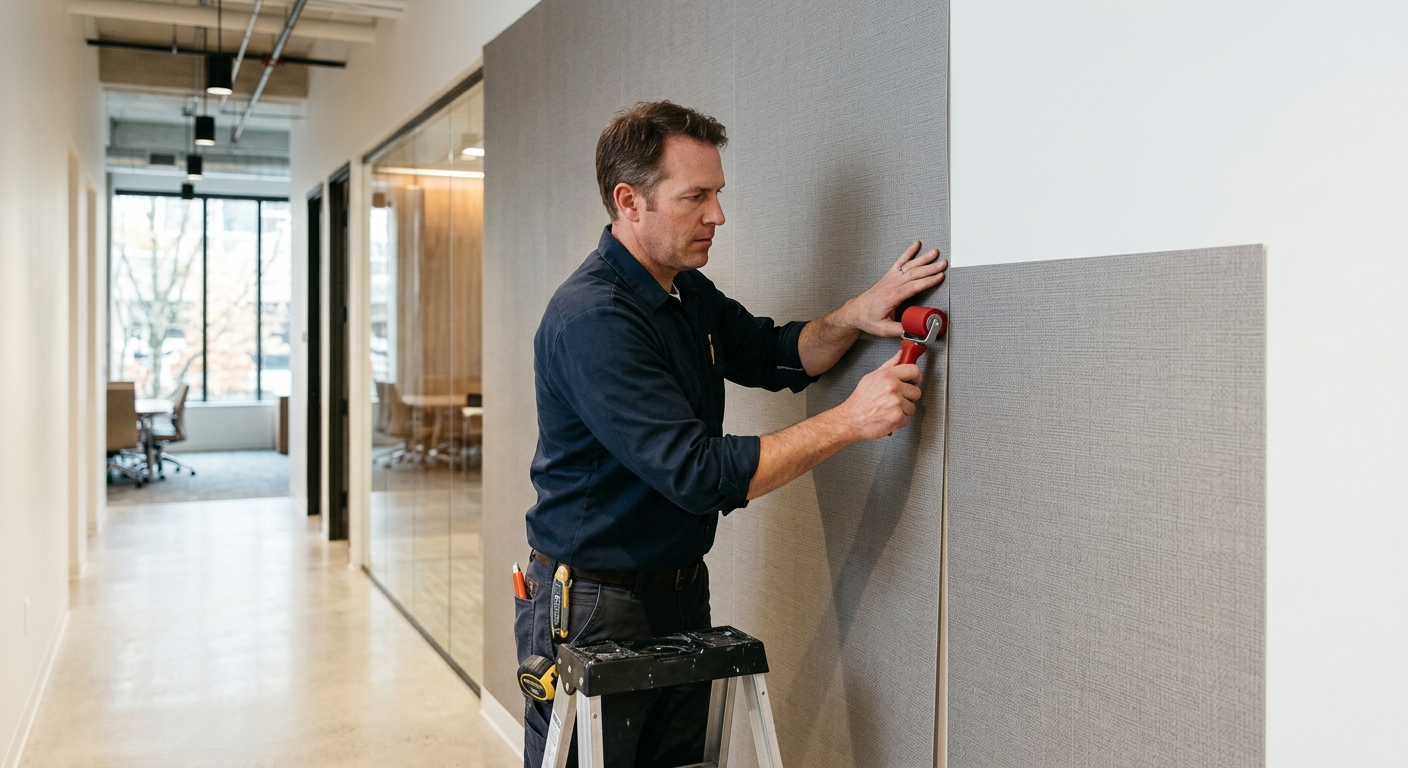
Why Wallpaper Installation Cost Varies So Much
There’s no single price for wallpaper installation, and any quote that’s given sight-unseen should be treated with caution. The cost of the same-sized room can differ dramatically depending on the material chosen, the state of the walls, and whether existing wallcovering has to be removed first. Rather than a flat rate, wallpaper is priced from the specifics of your project — which is why an in-person walkthrough is the only way to get an accurate number.
Below are the factors that actually move the price, in roughly the order they matter.
A Realistic Way to Think About the Price
It helps to separate the two halves of the cost, because they behave very differently. Labor is the more predictable half: professional installation generally runs in the range of a few dollars up to roughly ten dollars per square foot for standard residential work, with complex specialty and commercial installs — tall walls, intricate patterns, delicate materials — landing higher. Most installers also set a job minimum to cover setup, adhesive, and prep time, so even a single small accent wall carries a baseline cost.
Materials are where the wide swings happen, and they’re impossible to generalize: wallpaper can run anywhere from around $5 per square foot for budget vinyl to $500 per square foot for hand-crafted, imported, or designer wallcoverings. That hundred-fold spread is exactly why a per-square-foot “wallpaper cost” figure from a search result means very little until you’ve chosen a specific product. Two identical rooms can differ by thousands of dollars based purely on the paper on the wall. Treat any number you see online — including the labor range above — as a rough starting point, not a quote; the only figure that means anything is the one an installer gives you after seeing your walls and your chosen material.
The Factors That Drive Wallpaper Installation Cost
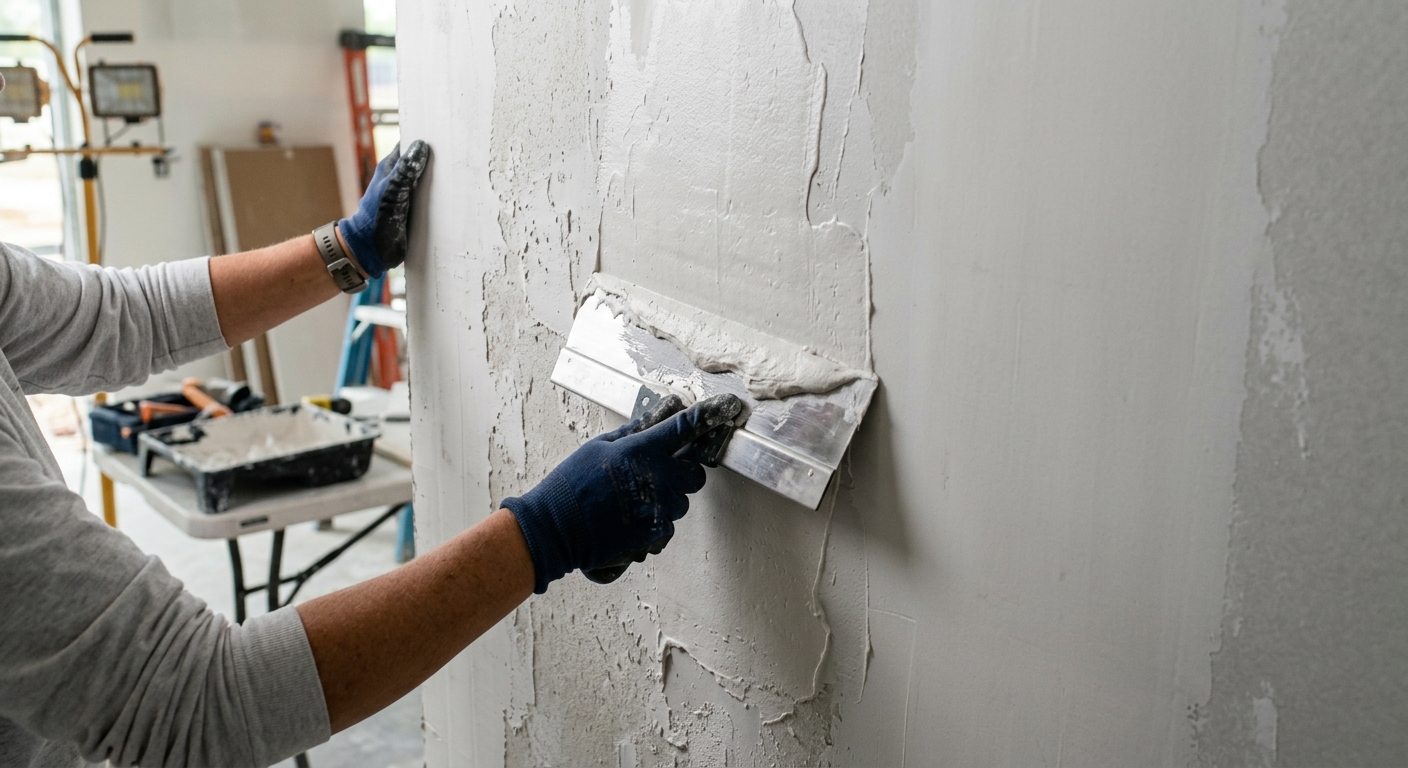
Wall preparation. Wallpaper is unforgiving of imperfections — every bump, dent, and seam telegraphs through the finished paper. Walls often need skim-coating, sanding, and a coat of primer or sizing before installation, and that prep is frequently the largest variable in the whole project. Smooth, sound walls install quickly; textured or damaged walls that need drywall repair and smoothing take more time and material, but skipping that step guarantees a poor result.
Removing old wallpaper. If existing wallcovering has to come down first, it adds meaningfully to the cost. Old, multi-layered, or heavily-glued paper takes longer to strip and can damage the wall underneath, adding prep work afterward. Removal is one of the most underestimated parts of a wallpaper budget — always ask whether a quote includes it.
Wallpaper type. Material choice affects both the paper cost and the labor, and this is where prices swing the most:
- Non-woven and standard vinyl — the easiest to hang and most forgiving; the lower end of labor and materials.
- Grasscloth, silk, and natural materials — beautiful but require careful handling, seam matching, and paste control; higher labor and materials.
- Large-scale murals — priced per panel and demanding precise alignment; a specialized job.
- Peel-and-stick — cheaper materials, but quality varies widely, and it still rewards professional prep on the wall behind it.
Pattern matching. Bold or large-repeat patterns waste more material and take longer to align at seams and corners, raising both material and labor costs. Solid or small-repeat patterns are the most economical.
Room complexity. High ceilings, stairwells, arches, tight corners, and lots of windows and doors all slow installation compared to a simple four-wall room.
Labor vs. Materials
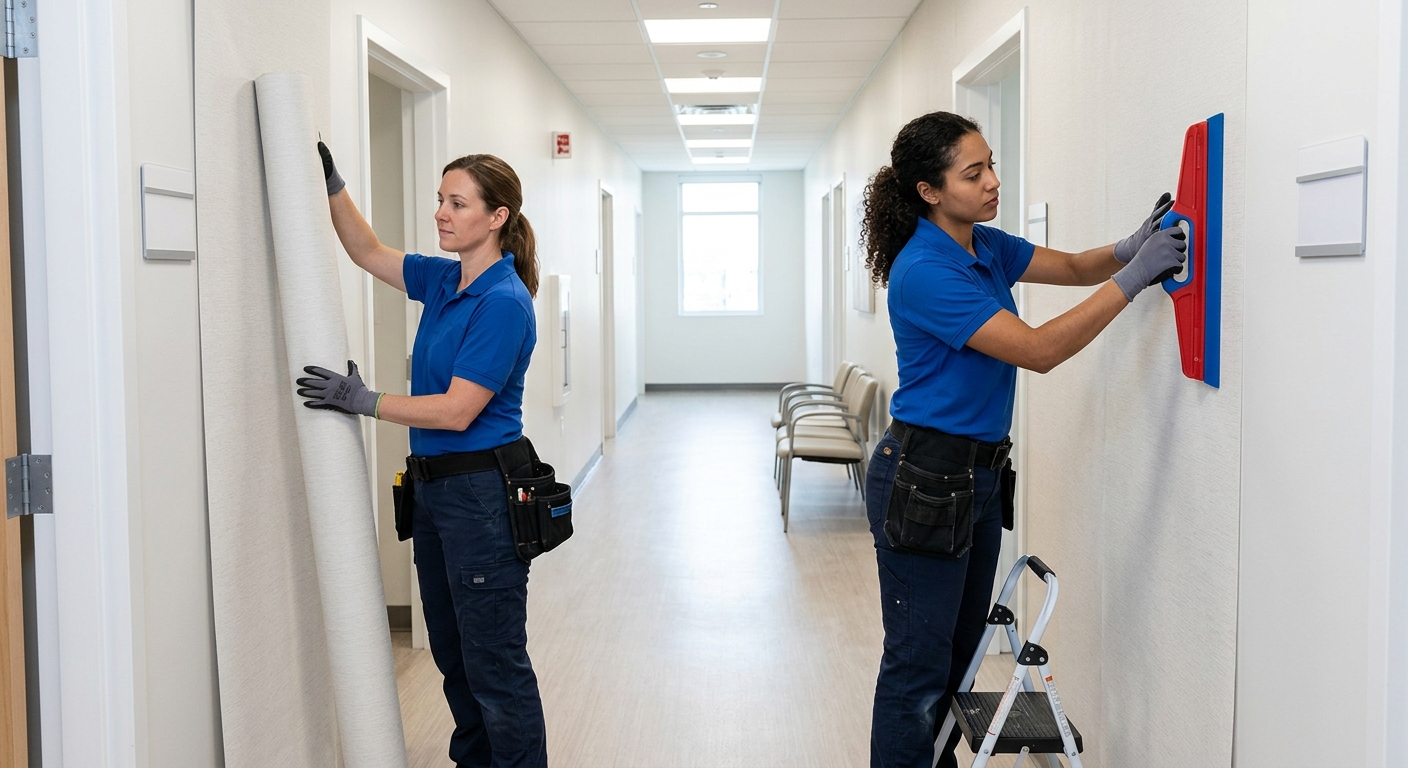
A wallpaper project splits into two costs: the paper and the installation. As noted above, material pricing varies enormously by product — from inexpensive standard patterns to premium grasscloth, silk, and murals that cost many times more. Labor is the more stable of the two, and it’s where an experienced installer earns their price: clean seams, proper alignment, and prep that keeps the finish looking right for years. The cheapest quote often reflects skipped prep, not a better deal.
DIY vs. Professional Installation
Peel-and-stick and simple patterns tempt many homeowners into DIY, and for a small accent wall in good condition it can work. But wallpaper is one of the finishes where professional installation most clearly pays off: bubbles, misaligned seams, lifting corners, and telegraphed wall flaws are common DIY outcomes, and fixing them often costs more than hiring a pro would have. For grasscloth, murals, high walls, or any wall needing prep, professional installation is almost always the better value.
Commercial Wallpaper & Wallcovering
Commercial wallcovering — offices, healthcare, hospitality, retail — is scoped differently, since it uses durable Type I and Type II vinyl, often over larger areas with tenant-improvement scheduling and code considerations. If you’re pricing a commercial project rather than a home, see our dedicated guide to commercial wallcovering installation for how those projects are scoped and quoted.
How to Get an Accurate Wallpaper Quote
Because prep, removal, and material choice drive so much of the cost, a reliable quote requires someone to actually see the walls. When you request an estimate, mention: the square footage or room dimensions, whether old wallpaper needs removing, the wallpaper type you’re considering, and any wall damage or texture. A good installer will give you an itemized estimate that separates prep, removal, materials, and installation — so you can compare bids on equal terms rather than being lured by a low number that hides a smaller scope or leaves out prep entirely.
Frequently Asked Questions
What determines the cost of wallpaper installation?
The main drivers are wall condition and prep, whether old wallpaper must be removed, the type of wallpaper chosen, pattern-matching complexity, and room features like height and corners. Labor is relatively predictable; materials range enormously — from budget vinyl to designer wallcoverings that cost dramatically more per square foot — so an in-person estimate is the only reliable figure.
Is it cheaper to paint or wallpaper?
Painting is usually cheaper upfront, especially for large areas. Wallpaper typically costs more but offers texture, pattern, and durability paint can’t match — and quality wallcovering can outlast several repaint cycles in high-traffic areas.
Does removing old wallpaper add to the cost?
Yes — often significantly. Stripping existing paper takes time, and older or layered wallcovering can damage the wall beneath, requiring repair before new paper goes up. Always confirm whether removal is included in a quote.
Do walls need to be prepped before wallpaper?
Yes. Wallpaper shows every flaw beneath it, so walls usually need cleaning, smoothing, and priming or sizing first. Proper prep is the difference between a finish that looks flawless and one that bubbles or peels.
Can I install wallpaper over textured walls?
Not well. Texture telegraphs through the paper. Textured walls should be skim-coated smooth first — which adds cost but is necessary for a professional result.
Get a Wallpaper Installation Estimate in Portland
Whether it’s a single statement wall or a whole-home project, District Painting Co. handles wallpaper and wallcovering installation — and the wall prep and old-paper removal that make the result last. We’ll walk the space, give you an itemized estimate, and recommend the approach that fits your material and budget.
Explore our wallcovering installation and removal services or request a free estimate. Call (503) 560-7662 to get started.
